
Rule 1. Introduce the Real People
Use names, roles and a good photo. Tell visitors who does the work and who they will talk to first. A small business can show off its personal approach simply by being itself.
Write the way you talk to customers. The page should sound like someone the visitor could pick up the phone and call.
Meade Construction Shows the Work Before the First Meeting
Ross and Emily Meade build custom homes. Their website puts each finished project in its own gallery with the homeowner’s review, so a prospective client can see the quality of the work before they call.
Screenshots captured September 17, 2026.
The portfolio does the selling
Every finished home becomes a page a future client can browse before the first meeting.
See the Meade Construction & Design project →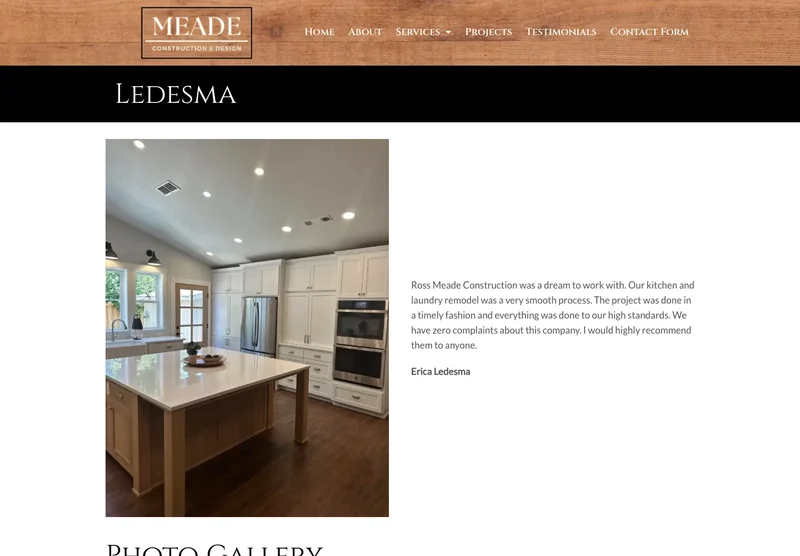
Rule 2. Share the Experience That Helps Them Decide
Tell a short story about how the business started or the kind of work you focus on. Use accurate dates and specific examples. If a claim needs proof, give the context or leave it out.
Keep the customer’s question in mind: what does this story tell them about working with you?
Rule 3. Point to the Next Step
Link to a few relevant projects or services and give a clear way to get in touch. Let people know what to bring to the first conversation, especially if they are starting without a full plan.
Then trim the repeats. Your service pages already describe the services. The About page has its own job: help a potential customer understand you and your people well enough to want to start a conversation.
What Fast Looks Like on a Phone
These are Google PageSpeed Insights results for two websites we built. Russco Enterprises is an excavation company in Douglas County. Oregon RV Outlet is an RV dealership in Grants Pass with a photo-heavy inventory.
Russco Enterprises · Mobile
Google PageSpeed Insights, August 2, 2026
Oregon RV Outlet · Mobile
Google PageSpeed Insights, September 11, 2026
Individual homepage laboratory tests; scores can change between runs. Both sites scored 100 for desktop performance. See the Russco project · See the Oregon RV Outlet project

I run Good Creations in Grants Pass. I work directly with business owners on website design, content, and search. My work includes service writing, inventory websites, and custom publishing tools.
Meet Bob