1. Which Pages and Problems Will You Work On?
Ask for the first priorities and why they matter. A provider may need an audit before they can define every task, and the proposal should explain what that audit produces and how the work after it is scoped.
Look for a clear link to the services and customers you want more of. A plan tied to your own services, like the repair work you want to grow, gives you something specific to judge.
Russco’s Service Pages Show Up for the Jobs People Search
When we researched the excavation market in Douglas County, we built Russco Enterprises a separate page for each of its 12 services and 5 service areas. Search Console shows those individual pages appearing for the jobs people search for.
August 17 to September 13, 2026. Google Search Console web-search totals. Traffic is still modest; impressions count appearances in search results.
A page for every job
A property owner searching for trench digging lands on a page about trench digging, with the equipment, the factors that affect an estimate, and a way to request one.
See the Russco Enterprises project →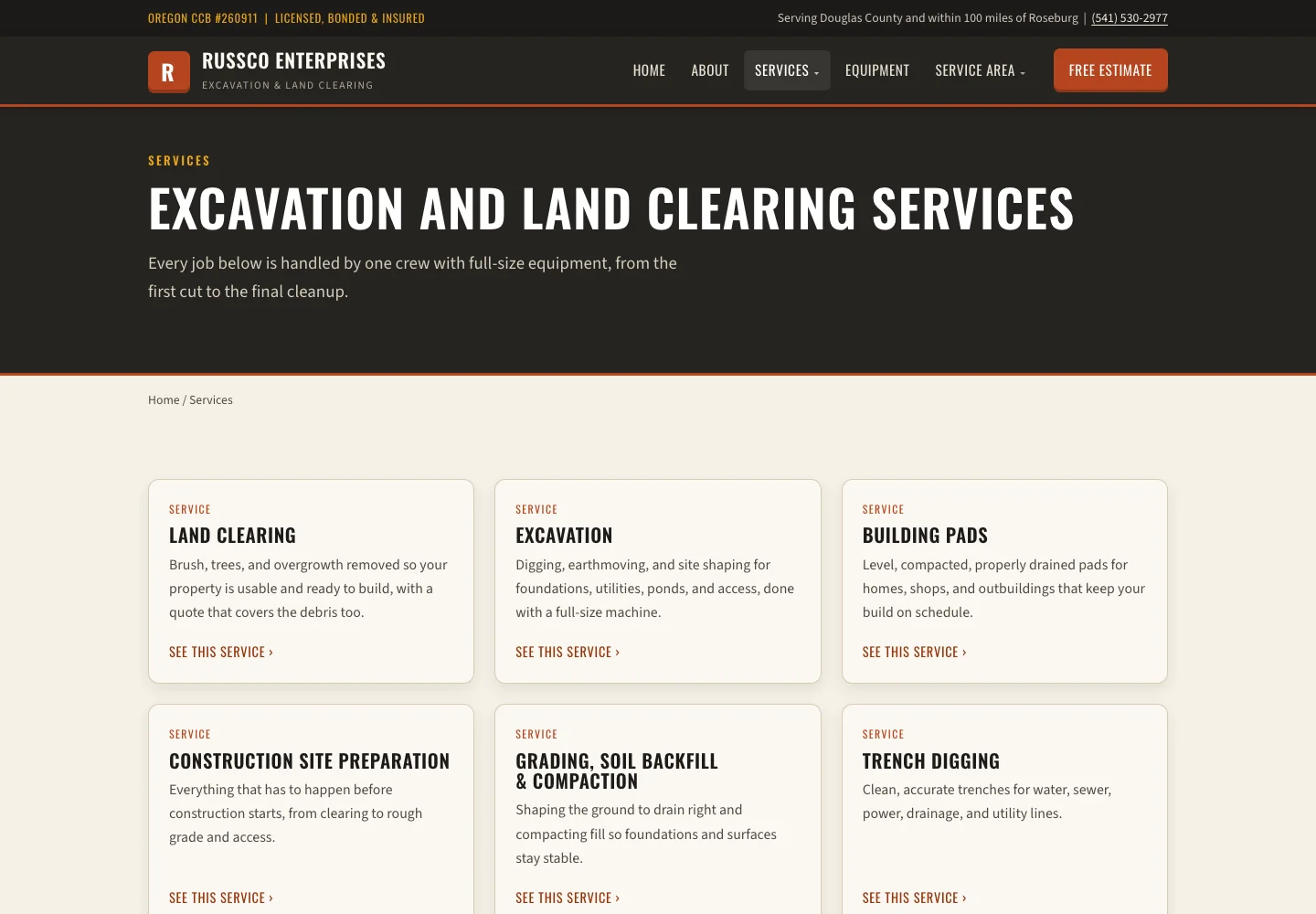
2. What Access Do You Need?
Name the website, analytics and search accounts involved. Agree on the right permissions for each task, and keep your business accounts in your own name.
Ask how checking your public pages differs from any work that touches private customer records. Those call for different permissions, and you should know which ones you’re handing over.
3. What Evidence Supports the Claims?
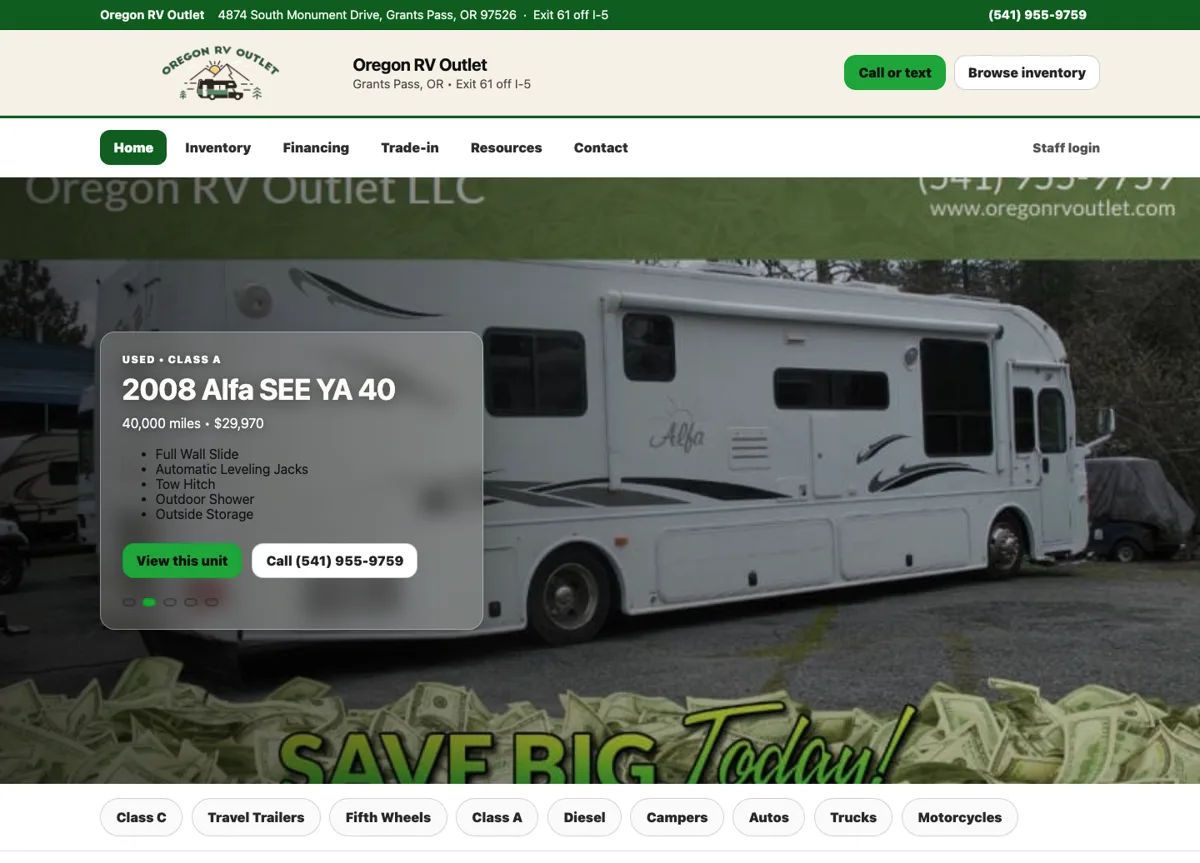
A case study should name the work, the reporting period and what the figures count. Our Oregon RV Outlet example keeps the documented search activity separate from the website features we built.
Impressions count how often you appeared in search, and customers are the people who called or bought. When numbers rise after a change, it takes more evidence to say that one change caused it.
4. How Will the Report Guide a Decision?
Ask which searches, pages, visits and inquiries the report covers, and what happens when a finding needs action. A good report explains what was observed and what to look into next.
Samples of AI answers need their tool, date and question written down. Treat each one as a snapshot of that day.
Air-Weigh’s Guides Bring In 41% of Its Google Clicks
Air-Weigh makes on-board scales for trucks. Its website has a detailed weight-law guide for each state, answering the question a fleet manager or driver types into Google.
August 17 to September 13, 2026. Google Search Console clicks and impressions; AI-assistant sessions from Google Analytics (75 attributed to ChatGPT). Site-wide activity, not sales.
Answer the exact question
The California and Texas guides each run about 900 words, and they rank for questions as specific as the bridge-law chart for Montana.
See the Air-Weigh project →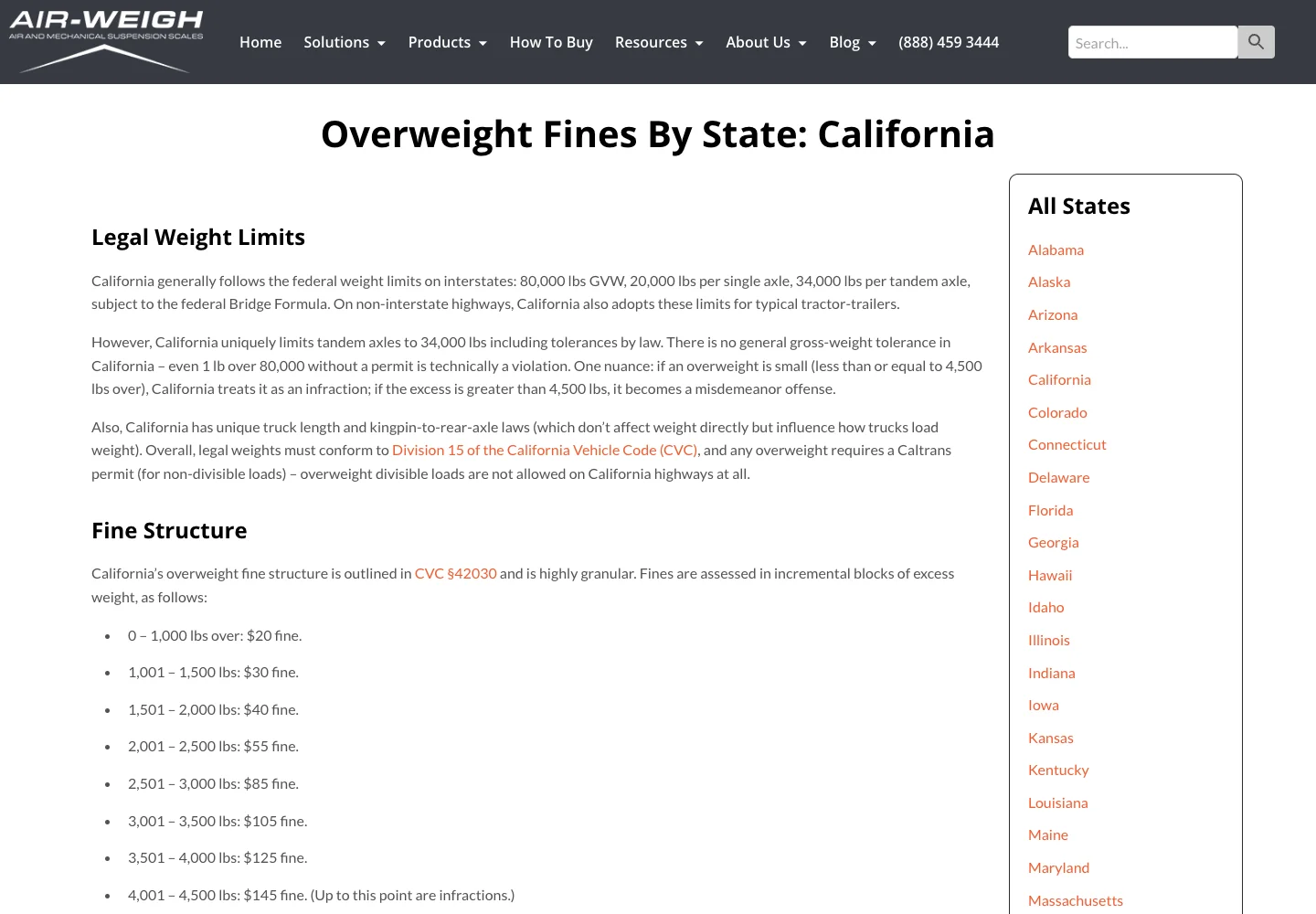
5. What Belongs to Us Afterward?
Get clear answers about who owns and can reach the content, accounts, reports and tools. Ask what the ongoing responsibilities are and what changes when the engagement ends.
Hold the answers up against the service scope. You should be able to point to what gets delivered and what you can check, all of it work the provider controls.
Ask for the Answers in the Proposal
A proposal you can work with names the first pages or problems, the deliverables, what you need to provide, who approves the facts and how you’ll know each task is done. It keeps the work the provider controls separate from results that depend on search engines and customer behavior.
For reporting, ask to see how a finding turns into an action. “Traffic went up” is an observation. “This service page attracts unrelated searches, so we will review its topic and title” is work you can check. The provider still needs evidence before crediting a change to its own edits.
Confirm who owns the content, accounts and access. An outside provider may need permissions to do the work, and you should know what it can change and how that access ends. Keep the proposal with your reporting record so you can compare the promised work with what was delivered. If you have questions about a proposal in front of you, call me at (541) 226-8087.

I run Good Creations in Grants Pass. I work directly with business owners on website design, content, and search. My work includes service writing, inventory websites, and custom publishing tools.
Meet Bob