AI search optimization can sound like the next thing that takes your money and hands back a chart. Asking for proof is a healthy instinct.
Here is the good news. You can measure what AI search optimization earns you with free tools and simple math, and connect the money you spend to real leads, customers and revenue.
The Simple ROI Formula
ROI compares what you got with what you spent. For AI search optimization, it looks like this:
- What you spent: website improvements, content creation or professional services. Count your own hours if you did the work yourself.
- What you got: new leads, customers and revenue that came through your website after the changes.
- The calculation: revenue from new customers, minus the total investment, divided by the total investment, times 100.
Here is an example with round numbers. Say you invest $5,000 in an AI-optimized website and a group of articles. Over six months, website leads turn into 10 customers worth $15,000. Your ROI is $15,000 minus $5,000, divided by $5,000, which comes to 200%.
The math is the easy part. The work is keeping track of what goes in and what comes out.
Oregon RV Outlet Turned Its Inventory Into Search Traffic
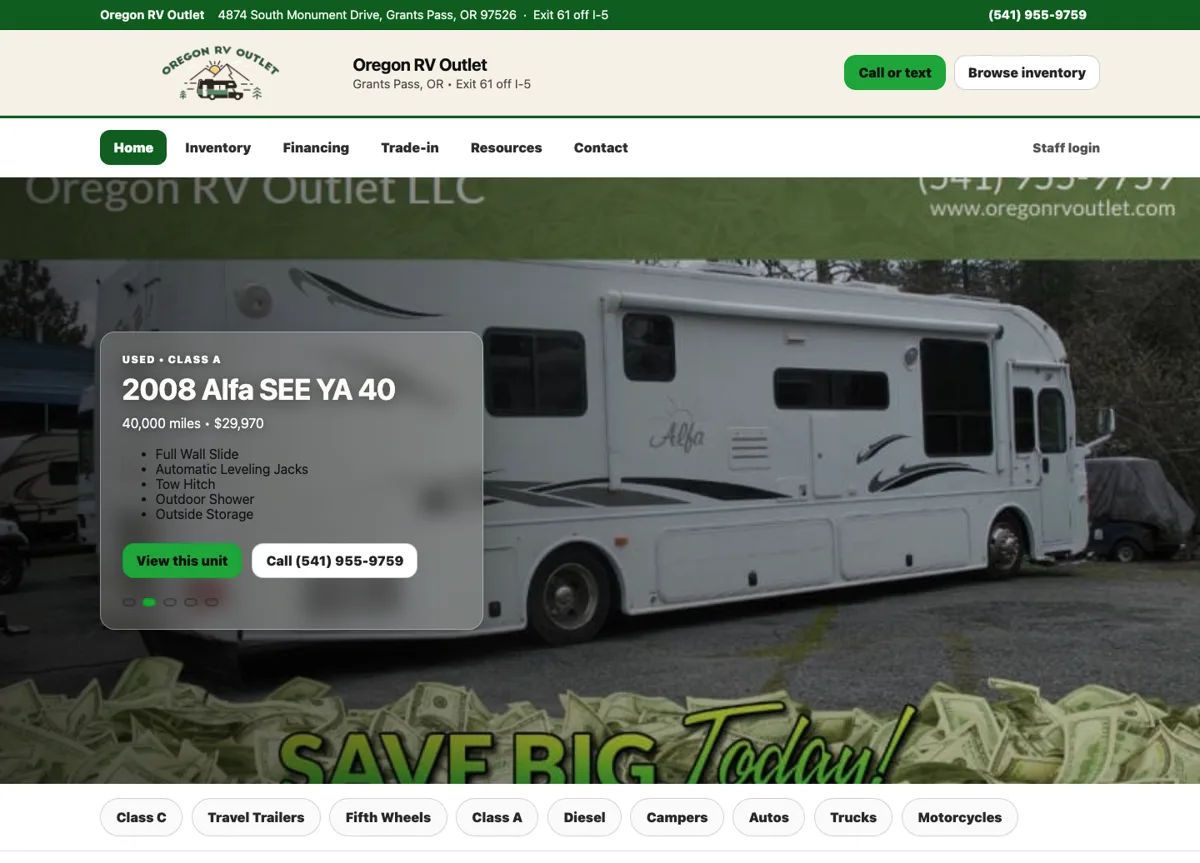
Every RV on Oregon RV Outlet’s lot has its own page with photos, specifications and a way to call or text about that unit. Those pages give Google something specific to show for each search a shopper makes.
August 13 to September 9, 2026. Clicks and impressions from Google Search Console; organic-search sessions from Google Analytics. These are different measures and are not added together.
One page for every unit on the lot
A shopper searching for a specific trailer can land on the page for that exact trailer, see the photos, and call about it.
See the Oregon RV Outlet project →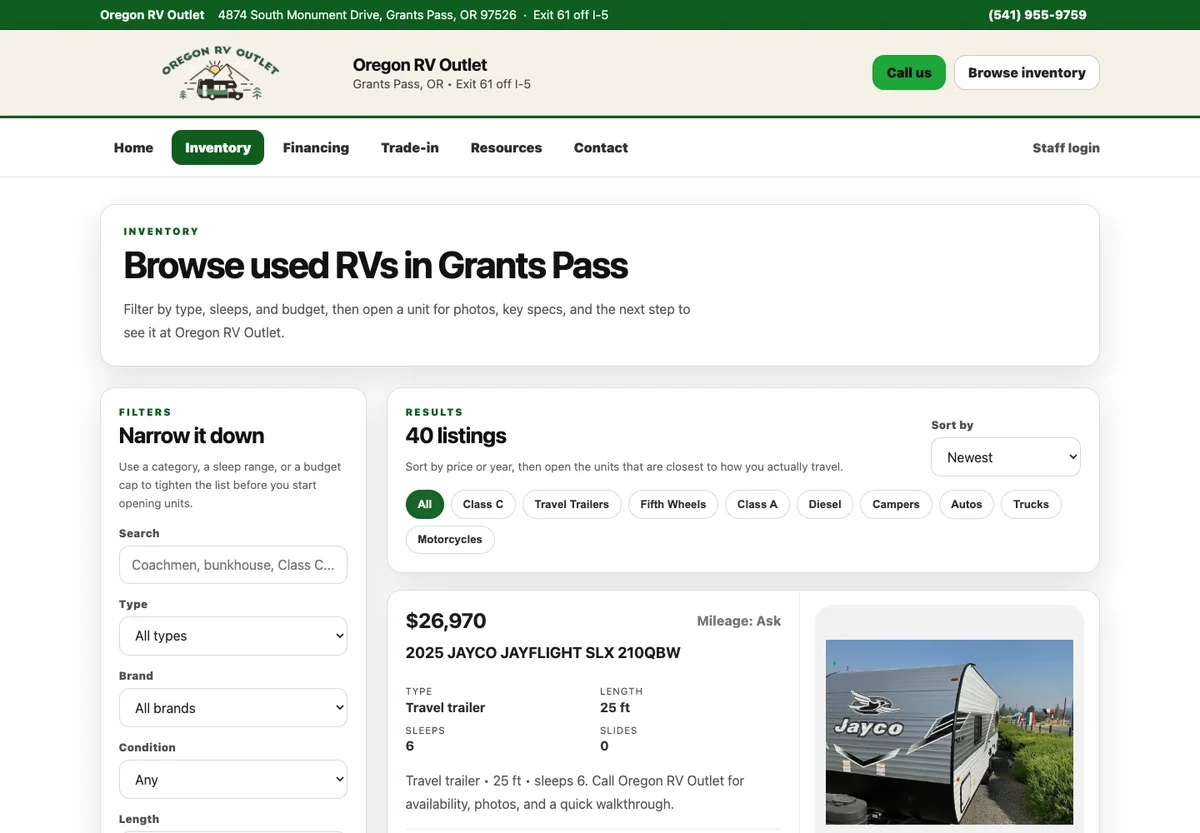
Know What a Customer Is Worth
Start by putting a dollar value on a new customer.
- Service businesses: a plumber might average a few hundred dollars per call and a few thousand for a water heater install. An HVAC replacement or a new legal client can be worth far more.
- Retail and local stores: a $50 sale can turn into $500 a year when the customer keeps coming back.
- E-commerce: start with your average order, then factor in how often customers reorder and what a customer is worth over time.
Work it out from your last 20 to 50 customers, then apply your close rate. If half of your leads become customers, each lead is worth half of your average customer value.
Setting Up Basic Website Tracking
Your website has to record what visitors do before you can measure any of this. At a minimum, set up the following.
Google Analytics
Google Analytics shows how many people visit your site, where they came from and what they looked at.
- Total visitors
- Traffic sources (organic search, direct, referral)
- Pages per session
- Time on site
Conversion Tracking
Conversion tracking records the actions that mean someone wants to hear from you:
- Form submissions
- Phone number clicks on mobile
- Online booking confirmations
- Live chat initiations
Optional Call Tracking
Call tracking tools such as CallRail give your website its own phone number, so every call from the site is logged and credited to the right source.
Tracking Which Content Generates Leads
Once tracking is running, you can see which pages bring in business.
Page-Level Traffic
Watch each new article for:
- How much traffic each article gets
- Where the traffic comes from
- How long visitors stay
- How often they bounce
Content-to-Conversion Paths
Analytics shows which articles people read before they got in touch. Picture a homeowner in Medford who reads your “warning signs your water heater is failing” article, clicks through to your water heater service page and fills out the form. You can trace that lead straight back to the article.
Before-and-After Tracking
Before you change anything, write down where you stand today:
- Monthly visitors
- Monthly website leads
- Monthly revenue from website leads
Track the same numbers for three to six months after launch and compare.
Russco’s Service Pages Show Up for the Jobs People Search
When we researched the excavation market in Douglas County, we built Russco Enterprises a separate page for each of its 12 services and 5 service areas. Search Console shows those individual pages appearing for the jobs people search for.
August 17 to September 13, 2026. Google Search Console web-search totals. Traffic is still modest; impressions count appearances in search results.
A page for every job
A property owner searching for trench digging lands on a page about trench digging, with the equipment, the factors that affect an estimate, and a way to request one.
See the Russco Enterprises project →
Tracking Offline Conversions
Plenty of leads pick up the phone or walk in the door. Capture those too.
Ask Callers
Have whoever answers the phone ask, “How did you hear about us?” and write the answer down.
Track Total Call Volume
If calls rise after you publish new content, that tells you something even when you can’t trace every call to a page.
Note Content Mentions
Customers often mention an article they read. Keep a running note of those mentions.
A Simple ROI Tracking System
A spreadsheet does the job. Each month, record:
- Investment: content published, costs and the running total you have spent
- Results: visitors, leads, customers and revenue
- ROI: cumulative revenue minus cumulative investment, divided by cumulative investment, times 100
Expect the first few months to show a loss. The numbers often turn positive somewhere between month four and month twelve.
Setting Realistic Expectations
- Indexing takes time. It can be weeks before new content is fully crawled.
- Visibility builds gradually. AI tools start citing you slowly, then more often.
- Leads trail traffic. Visitors often get in touch weeks after they first find your content.
- Timeframe: look for meaningful trends in three to six months and the full return in six to twelve.
Week-to-week numbers bounce around like a fuel gauge on a bumpy road. Judge the trend month by month and quarter by quarter.
When Tracking Is Built In
Plenty of small business websites have no tracking at all. The forms send email to someone, the phone rings, and nobody can say which pages earned those leads.
A professionally built website should include tracking from day one:
- Conversion goals configured
- Phone click tracking enabled
- Form submission tracking active
- Content performance reporting
With that in place, you can see how your investment is performing from the first month.
Measuring What Matters
Leads, customers and revenue are the numbers that pay the bills. Rankings and traffic are useful signs along the way.
Free analytics and a monthly habit of writing things down will tell you whether AI optimization is paying off.
If you would like a second set of eyes on your numbers, or help setting realistic expectations for your budget, call or text me at (541) 226-8087. We’ll look at what’s working, what’s missing and what to measure next.
Related Articles

I run Good Creations in Grants Pass. I work directly with business owners on website design, content, and search. My work includes service writing, inventory websites, and custom publishing tools.
Meet Bob