That matters because more people get their answer without clicking through to a website. The businesses AI tools can find, understand and trust are the ones that reach this growing group of customers.
Small businesses that adapt early have the advantage. Here’s what changed and what to do next.
How Search Has Changed
Many Google searches now show an AI Overview, an answer assembled from several websites. It sits above everything else and often answers the question on the spot.
Ask ChatGPT or Perplexity for a recommendation and they answer directly, sometimes citing specific businesses.
When an AI answer appears at the top, many searchers stop there. The answer reaches them before they reach any website.
SEO still matters, and the prize has moved. The businesses cited inside AI answers get the attention, and everyone else competes for the clicks below.
Air-Weigh’s Guides Bring In 41% of Its Google Clicks
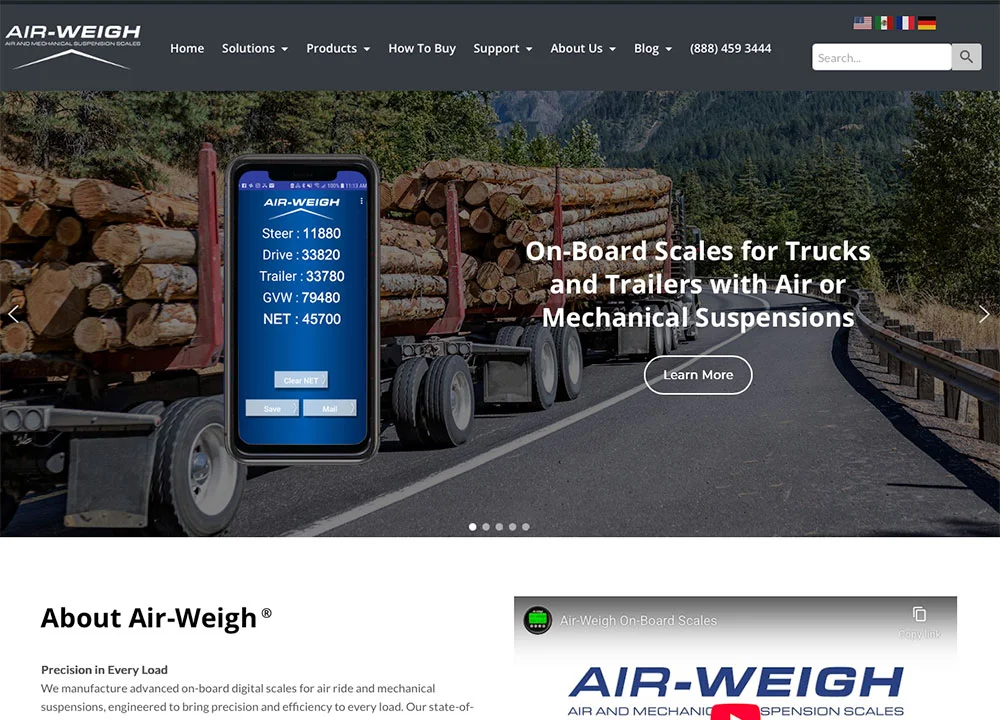
Air-Weigh makes on-board scales for trucks. Its website has a detailed weight-law guide for each state, answering the question a fleet manager or driver types into Google.
August 17 to September 13, 2026. Google Search Console clicks and impressions; AI-assistant sessions from Google Analytics (75 attributed to ChatGPT). Site-wide activity, not sales.
Answer the exact question
The California and Texas guides each run about 900 words, and they rank for questions as specific as the bridge-law chart for Montana.
See the Air-Weigh project →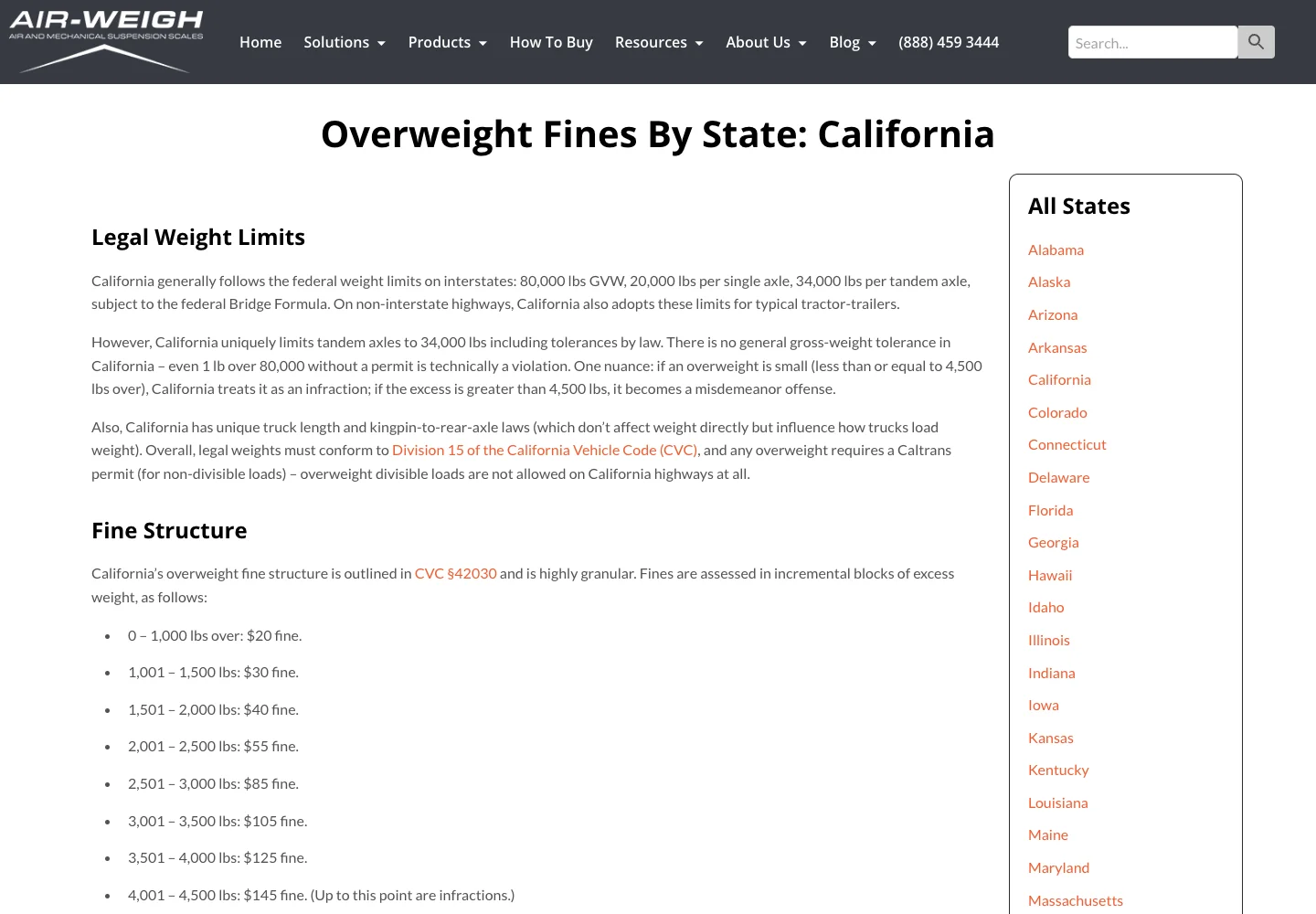
What AI Search Optimization Means
AI search optimization means making your business easy for AI systems to understand and recommend.
Traditional SEO focused on keywords. AI looks at the bigger picture: what your business is, what you offer, who you serve, and how those topics connect.
AI also needs structure: clear headings, a separate page for each service, answers to specific questions, and consistent formatting. A brochure-style site gives it very little to work with.
Schema markup adds labels that tell AI what your content is: your business details, services, FAQs and service areas. Visitors never see it, and machines rely on it.
Why This Matters for Small Businesses
Three examples show why:
A local dentist. Someone in Medford asks ChatGPT how to find a dentist their kids will actually like. The practice whose website explains its approach, credentials and philosophy gets cited.
A plumbing company. Google shows an AI answer explaining why water heaters make noise, drawn from the plumber who published a troubleshooting article on the subject.
A boutique retailer. A shopper asks Perplexity for gift ideas for gardeners, and the store that explained why certain products make great gifts appears in the answer.
AI rewards content that is specific, clear and useful.
Russco in Google’s AI Overview
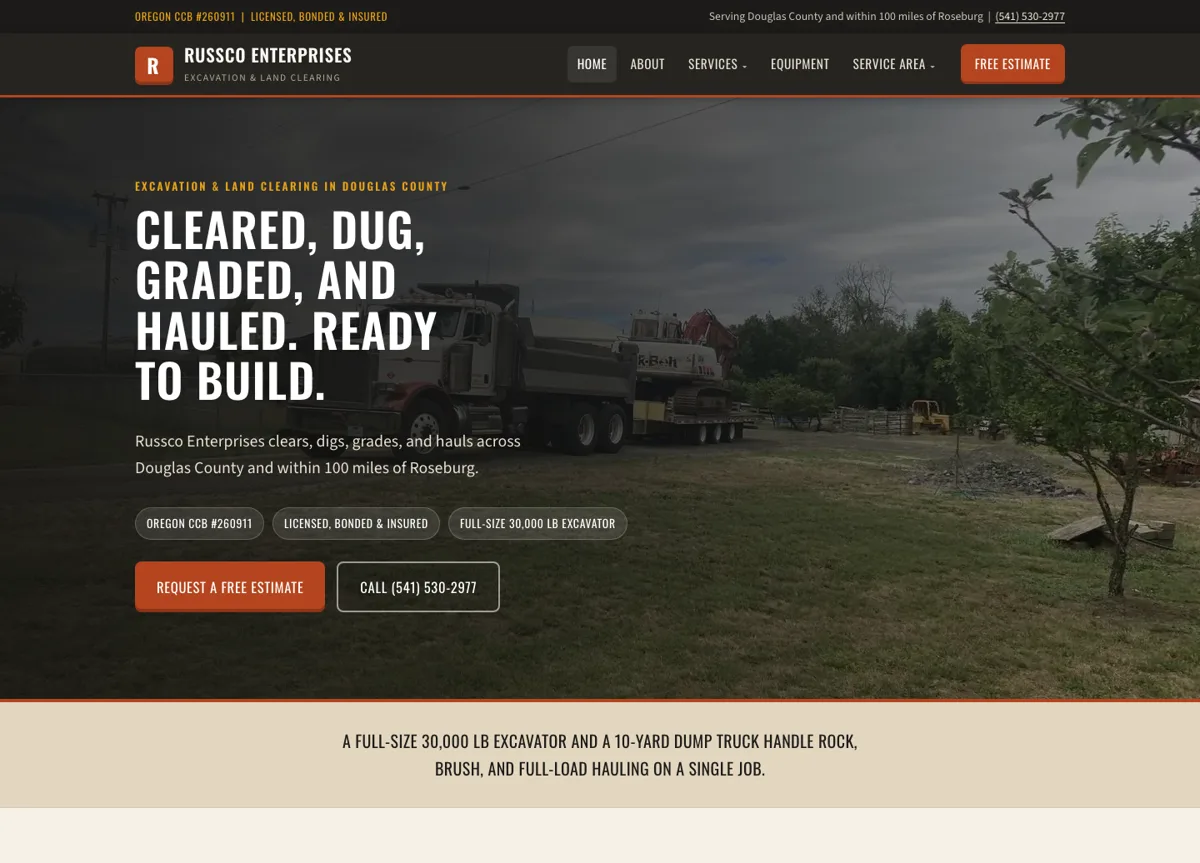
On September 16, 2026, we searched Google for “who does trench digging and land clearing in Roseburg Oregon.” Google’s AI Overview named Russco Enterprises, drawing on its homepage, its trench-digging service page and its Roseburg service-area page.
One dated search observation from Merlin, Oregon. AI answers vary by person, place and time. See the Russco Enterprises project
Building an AI-Ready Website
An AI-ready website is built with more intention, and it doesn’t have to be more complicated.
- Logical structure. Each service has its own page, and so does each location.
- Clear local details. Your service areas, address, phone, hours and Google Business Profile match everywhere they appear.
- Schema markup. LocalBusiness, Service and FAQ schema tell AI what your content means.
- A clear next step. When AI sends visitors to your site, they should see right away how to contact you.
Many small business sites were built before any of this mattered, so reworking the structure, or rebuilding, is often the practical path.
Content That AI Uses
The shift is simple: write about your customers’ problems as well as your products.
AI systems answer questions like these:
- How do I know if my truck is overweight?
- What happens if I get an overweight fine?
- How do truck scales work?
When Air-Weigh shifted to problem-based content, impressions increased 32.5 percent in 28 days (the full numbers are in the case study). Air-Weigh answered the questions its fleet managers were already asking.
AI cites content that is specific, helpful and authoritative, and content that answers a customer’s question fits that description.
A Practical Three-Phase Approach
Think of AI visibility in three phases:
- Phase 1: Fix your foundation. Structure, schema, service pages, location pages, and local consistency.
- Phase 2: Publish problem-based content. A cluster of 20 to 30 articles answering real customer questions.
- Phase 3: Measure and refine. Track citations, visibility, and lead flow. Improve based on real-world data.
Foundation work is technical. Writing content is something you can take part in, with a strategy behind it. Measuring results takes an understanding of how people search today.
The Questions Owners Ask Me
“Will AI make SEO obsolete?” No. Everything that helped a site rank still matters, and AI raised the standard.
“Can small businesses compete with big brands?” Yes. AI rewards depth and specificity, and on your own specialty a small business can out-produce any big brand.
“Is it too late?” No. Most businesses haven’t started. The window is open, and the businesses moving now are building an advantage that compounds.
What to Do Now
AI search optimization has two goals: help AI understand your business, and give it content worth recommending.
An AI-ready website takes care of the first. A focused content strategy takes care of the second. Together they build visibility that grows over time.
If you’re unsure whether your site is AI-ready, it’s worth checking. Call or text me at (541) 226-8087 and I’ll take a look.
Related Articles
- Do Local Brick-and-Mortar Businesses Really Need AI Search Optimization?
- Don't Believe the Hype: AI Search Truths for Small Business Owners
- Stop Overthinking AI Search: A One-Page Action Plan
- From Rankings to Recommendations: The New Rules of Local Search
- Optimizing Business Websites for ChatGPT and Generative AI Search

I run Good Creations in Grants Pass. I work directly with business owners on website design, content, and search. My work includes service writing, inventory websites, and custom publishing tools.
Meet Bob