Q: How do I make my business show up in ChatGPT and Perplexity?
A: To appear in AI answers from ChatGPT and Perplexity, your website needs Generative Engine Optimization (GEO). That means publishing clear, problem-solving content that AI tools can read, cite and recommend when someone asks for help with the problem you solve.
From Blue Links to AI Answers
If you have ever spent money on SEO and then looked at your analytics wondering why the phone isn’t ringing, plenty of business owners are right there with you. For years the goal was simple: rank on page one of Google and earn clicks from those familiar blue links. The ground is shifting. More people are asking questions inside AI tools, and the AI hands them a direct answer. That changes what “visibility” means for your business.
Think about how a newspaper used to work. You bought the paper, flipped to the ads section you needed, and found a handful of options. Google’s blue links worked the same way: you searched “best chiropractor in Medford,” got a list, clicked around and decided. AI platforms such as Perplexity act more like a knowledgeable clerk behind the counter. You ask a question, and it says, “Here’s what you should do, and here are the sources I trust.” The goal is to be one of those trusted sources. Want AI to recommend your business? Here is what it takes
This is where Generative Engine Optimization (GEO) comes in. GEO is the next layer on top of SEO. Traditional SEO focused on keywords, backlinks and technical health so Google could index and rank pages. GEO focuses on whether AI systems can understand your expertise, pull the right facts, and confidently recommend you when someone asks a problem-based question. People search for a solution more than a keyword. Your content has to answer real questions in plain language, with the structure AI models need to interpret it correctly. What AI sees when it looks at your website (and what’s probably missing)
AI answers can also reduce clicks to websites. You might be mentioned in an AI response and still get less traffic than Google used to send. That can feel unsettling, and it is also an opportunity. The businesses AI tools choose to cite win higher-intent leads. If someone asks, “Who can help me fix my website conversion rate in Jackson County?” and the AI responds with a short list, being on that list is worth a lot. The goal has moved from ranking for a term to being the expert the machine chooses to mention.
Air-Weigh’s Guides Bring In 41% of Its Google Clicks
Air-Weigh makes on-board scales for trucks. Its website has a detailed weight-law guide for each state, answering the question a fleet manager or driver types into Google.
August 17 to September 13, 2026. Google Search Console clicks and impressions; AI-assistant sessions from Google Analytics (75 attributed to ChatGPT). Site-wide activity, not sales.
Answer the exact question
The California and Texas guides each run about 900 words, and they rank for questions as specific as the bridge-law chart for Montana.
See the Air-Weigh project →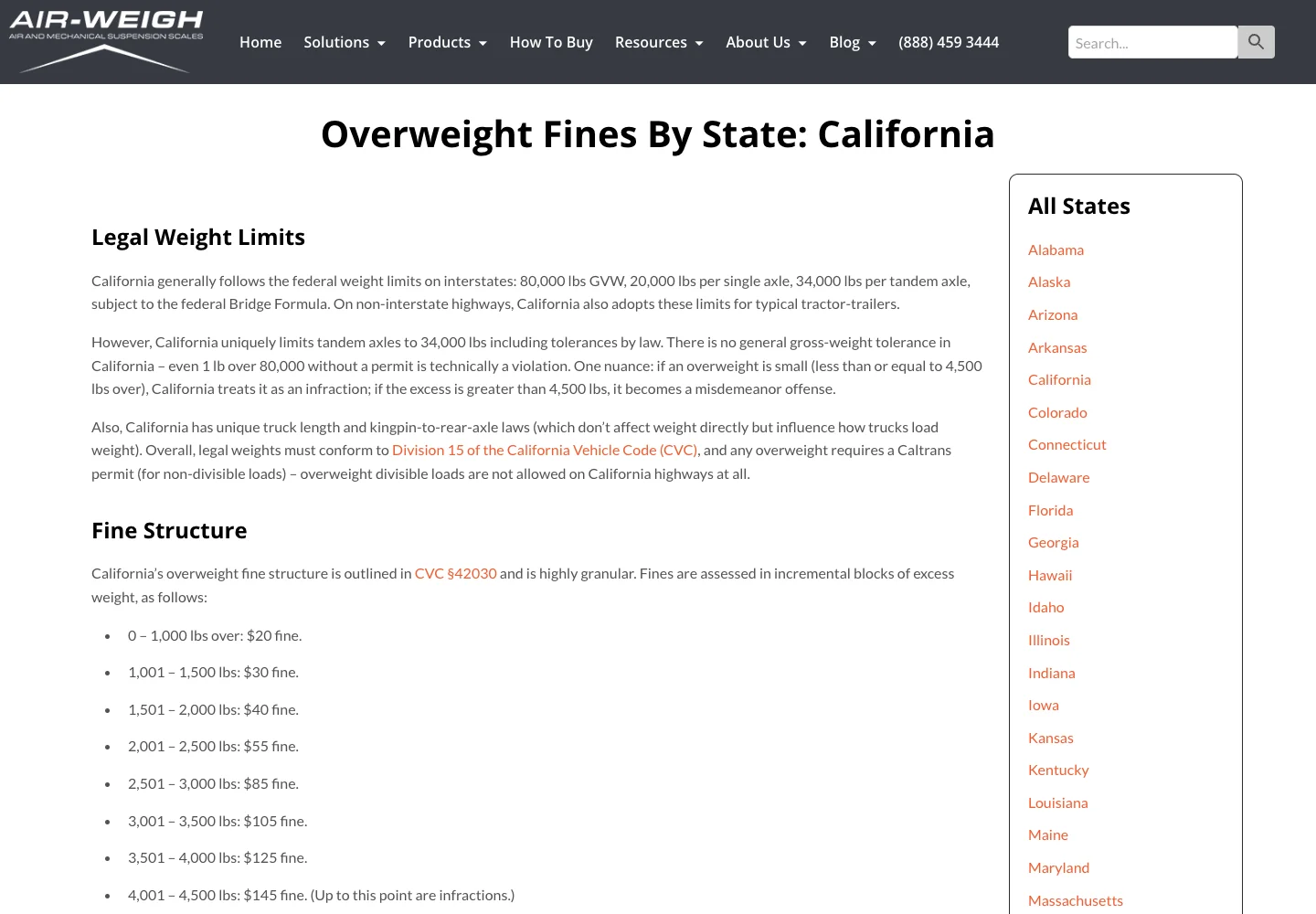
Write for People First, Then Optimize for AI
When I build or rebuild a business website, I keep one rule in front of me: build for humans, then optimize for machines. Your website still has one job, turning a curious visitor into a real customer. If the site reads like it was written for a robot, people bounce. Have you ever landed on a page, scanned it for a few seconds, and left because it felt generic, confusing or salesy? That is the digital version of walking into a shop and turning around because you can’t find what you need.
So the human side comes first: clear messaging, clear offers and clear next steps. If you are a contractor in Grants Pass, your homepage should answer three questions quickly: what do you do, who do you do it for, and what should I do next? Think of a well-run storefront. The sign tells you what the store sells, the aisles are labeled, and the cashier is easy to find. Online, that means headings that make sense, service pages that explain outcomes, and calls-to-action that are easy to spot.
Then we optimize for machines, because machines are now part of the buying process. AI tools and search engines parse your site for patterns, structure and signals. That is why I care about clear headings, consistent terms and pages that stay on topic. If one page tries to cover 12 services, an AI model may not know what you are best at. A focused page with clear explanations, FAQs and supporting details sends a strong, machine-readable signal about your expertise.
This also affects design and performance. A beautiful site that loads slowly or hides key content behind animations can be a problem, because machines have limits too. They need to reach your content quickly, understand it and match it to a question. I have worked with businesses where a redesign improved page speed, clarified the service structure and increased engagement while keeping the brand voice. The site became easier for people to use and easier for machines to interpret. That is the sweet spot.
Optimizing for machines means making your expertise easy to read, and it has nothing to do with stuffing pages with keywords. If you have certifications, years in business, a physical location in the Rogue Valley and a specific process you follow, put those details where people can see them and keep them consistent across the site. Machines read that consistency as a sign of credibility, and so do people.
The AI Authority Engine and 30+ Articles That Get Cited
If AI search is moving people from browsing to asking, your content strategy has to move from publishing blog posts to building authority. That is where my AI Authority Engine comes in: a planned set of 30+ articles that answer the exact questions your customers ask, with enough depth that AI systems can confidently cite and summarize your work.
Think about the old telephone exchanges. You asked the operator for the right connection, and the operator put you through. AI is acting like that operator, connecting people to the best answer. My job is to make your business one of the best answers for the problems you solve, and that takes coverage. Competitors with a library that explains the topic from several angles will outweigh a single great service page.
The 30+ article approach works because AI systems reward patterns of expertise. If you are a roofer serving Central Point and Eagle Point, you might have a core page about roof replacement, with supporting articles that answer questions like “How long does a roof replacement take?”, “What does a roof replacement cost in Southern Oregon?”, “How do I know if I need a repair or a replacement?” and “What happens if I wait until the winter rains?” Each article is a small piece of proof. Over time those pieces add up to authority in traditional search and in AI answers.
I build this strategy around solving problems. The articles that bring in leads meet a person at the moment of concern: a symptom, a cost, a timeline or a risk. That person wants a straight answer. When you publish it with clear details and a next step, you become the business they call, and AI tools surface you because they are built to find useful, well-structured explanations.
Shortcuts eventually get punished. Filler might earn a brief bump, and it fades. The AI Authority Engine is built for lasting visibility, earned by being the most helpful source in your category.
Want to talk about getting your business recommended by AI? Call me at (541) 226-8087 or send me an email.
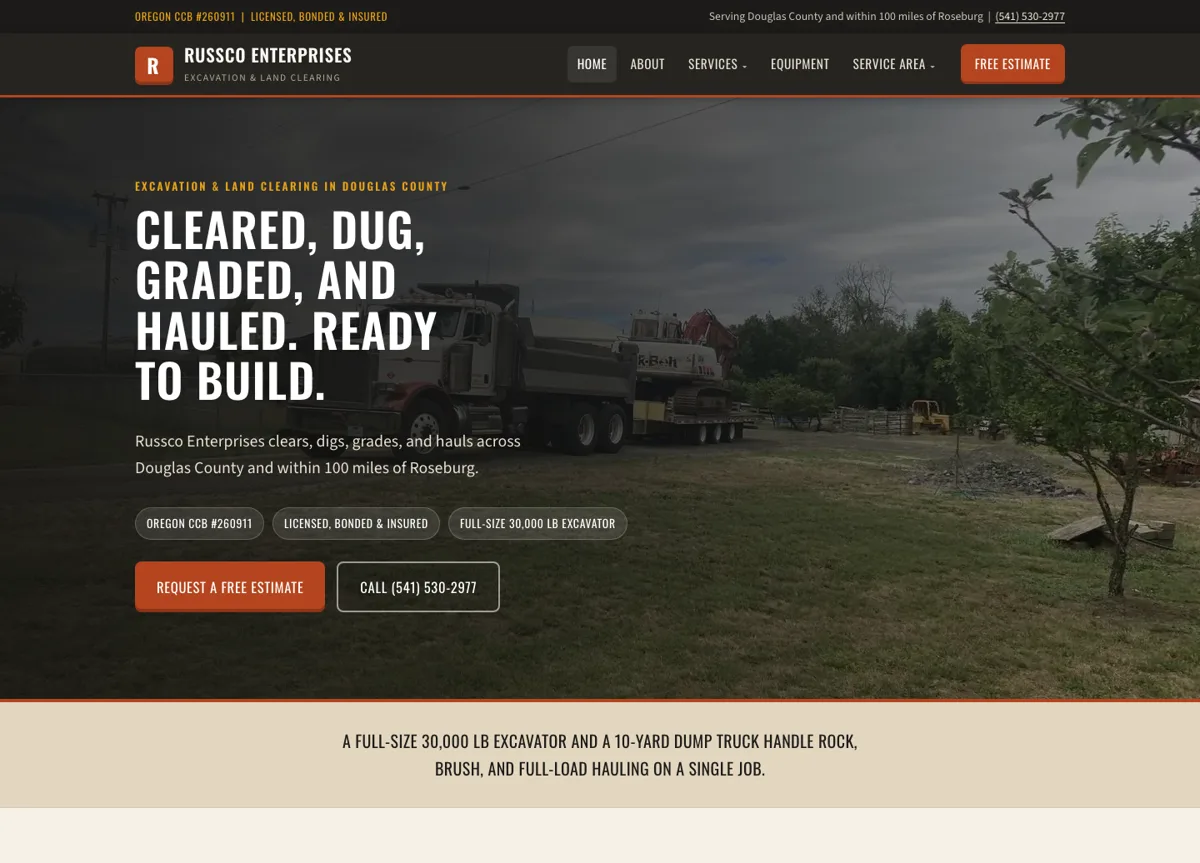
Russco in Google’s AI Overview
On September 16, 2026, we searched Google for “who does trench digging and land clearing in Roseburg Oregon.” Google’s AI Overview named Russco Enterprises, drawing on its homepage, its trench-digging service page and its Roseburg service-area page.
One dated search observation from Merlin, Oregon. AI answers vary by person, place and time. See the Russco Enterprises project
Structured Data, Content Labels and Authority Signals AI Can Trust
Now let’s get practical. To show up in ChatGPT and Perplexity, you need two things working together: content that demonstrates your expertise, and a site structure that makes that expertise easy to extract. The content is the “what.” Structured data and authority signals are the “how.”
First, tighten up your on-site authority signals. Do you have a clear About page with real names, credentials, and a timeline? If you have been serving Roseburg or Klamath Falls for 12 years, say that. If you have licenses, certifications, or specialized training, list them. If you have a process you follow, explain it in steps. AI tools look for these details because they reduce ambiguity. People do the same thing. When a visitor sees a clear story and proof, they are more likely to call.
Second, use structured data where it makes sense. Structured data is like putting labels on the shelves in your store so customers and staff can find what they need. On a website, that often means adding schema markup for your LocalBusiness information, services, FAQs, reviews, and key pages. When your name, address, phone number, hours, and service area are marked up consistently, machines can interpret them with fewer mistakes. When your FAQ content is marked up properly, it becomes easier for AI systems to pull question-and-answer pairs that match user prompts.
Third, write in a machine-friendly way and keep your human voice. Use descriptive headings, short sections and direct answers near the top of the page. If a page is about website conversion rate optimization, give the definition first and then explain. That serves both the busy reader and the scanning machine.
Fourth, build topic clusters. Group your content around a clear theme and link it together. A service page should link to its supporting articles, and those articles should link back to the service page. That helps AI systems understand how the ideas on your site relate, and it helps people explore without getting lost.
Fifth, keep your citations and claims clean. If you mention statistics, use credible sources. If you describe results, be specific. “We improve results” is weak. A specific improvement with a timeframe and the actions behind it is believable. You can keep confidential data private and still share enough detail to show you have done the work, and AI systems tend to favor content written by someone who has.
Related Articles
- What Makes a Website AI-Ready? A Feature-by-Feature Breakdown
- What AI Sees When It Looks at Your Website (And What's Probably Missing)
- Why Your Website Needs an AI Authority Engine (And What That Actually Means)
- How Small Businesses Stay Visible When AI Answers the Questions
- Slow Website, Lost Customers: The Hidden Cost Of Poor Performance

I run Good Creations in Grants Pass. I work directly with business owners on website design, content, and search. My work includes service writing, inventory websites, and custom publishing tools.
Meet Bob