
An AI-ready website is clear, fast, well organized and clearly labeled, so visitors and AI systems both understand quickly what you do, where you do it, and why you’re a good choice. It doesn’t take flashy design or cutting-edge technology.
Here’s what makes a website AI-ready, feature by feature, and what each feature does for your business. Use it to judge your current site or to plan a rebuild.
What AI-Ready Means
Most small business websites are built to look professional, and that’s the starting point. Being found in AI search takes a few more things.
AI tools look at things visitors never consciously notice:
- How information is structured
- Whether services and location are clearly stated
- How easily specific facts can be extracted
- Whether content has enough depth to demonstrate authority
An AI-ready website serves both audiences. It looks good to people and reads cleanly to machines, and that combination decides whether you get recommended.
Think of AI-readiness as infrastructure. Like the wiring and plumbing in a building, the structure behind your website is invisible to customers, and everything else depends on it.
Air-Weigh’s Guides Bring In 41% of Its Google Clicks
Air-Weigh makes on-board scales for trucks. Its website has a detailed weight-law guide for each state, answering the question a fleet manager or driver types into Google.
August 17 to September 13, 2026. Google Search Console clicks and impressions; AI-assistant sessions from Google Analytics (75 attributed to ChatGPT). Site-wide activity, not sales.
Answer the exact question
The California and Texas guides each run about 900 words, and they rank for questions as specific as the bridge-law chart for Montana.
See the Air-Weigh project →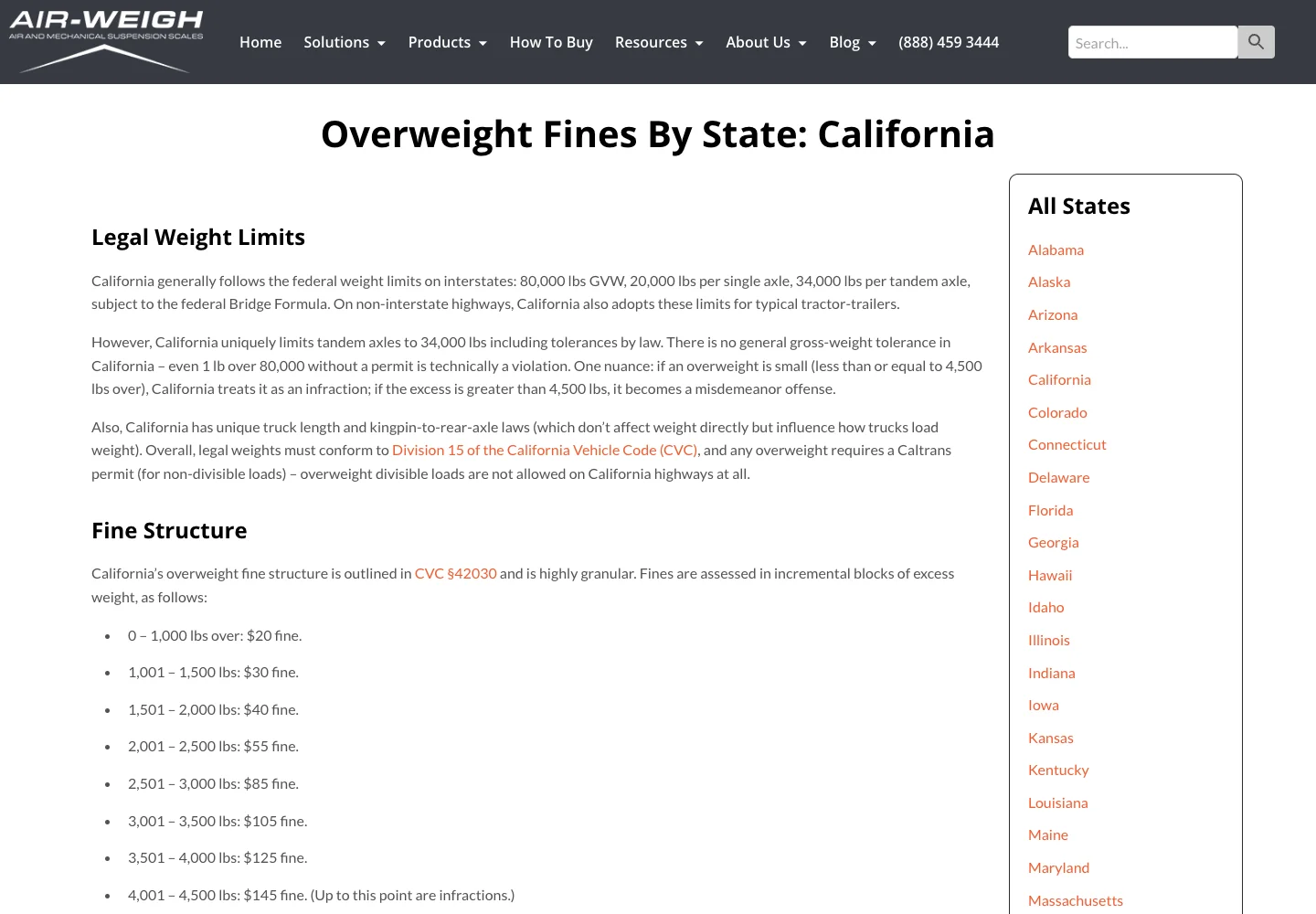
Core Structure, the Foundation AI Needs
Your site’s basic structure decides how accurately AI understands what you do. The core requirements:
Clear Navigation
Navigation should follow a logical order, with top-level items like Services, About and Contact, and submenus for the categories underneath.
AI uses your navigation to understand how things relate. A path like “Services → Plumbing → Water Heater Installation” tells AI exactly what you offer and matches you to the right searches.
Dedicated Service Pages
Each service needs its own full page explaining what the service includes, who it’s for and what customers can expect.
AI tools favor sites with dedicated service pages because the information is clearer and better organized.
Strong Homepage
Your homepage should tell visitors right away:
- What you do
- Where you do it
- Why you’re a good choice
Be specific. “Residential plumbing for Portland, Beaverton and Lake Oswego” tells AI and customers far more than “Quality service you can trust.”
About and Contact Pages
The About page builds confidence, and the Contact page gives verifiable business details. Both influence how AI judges your legitimacy.
AI favors businesses that share complete, open information about themselves.
Technical Foundations Behind the Scenes
Several behind-the-scenes factors decide whether AI tools can index and understand your site:
Mobile Optimization
More than half of visitors browse on phones. A site that works well on a phone keeps them, and AI tools give it more weight.
Fast Load Times
Fast pages bring more conversions and more visibility. Optimized images, lightweight code and good hosting improve both.
HTTPS Security
HTTPS is required for trust and rankings. Browsers warn visitors away from sites without it.
Clean, Crawlable Code
Clean code helps AI and search engines understand your structure. Heavy page builders often add clutter that gets in the way of indexing.
Russco in Google’s AI Overview
On September 16, 2026, we searched Google for “who does trench digging and land clearing in Roseburg Oregon.” Google’s AI Overview named Russco Enterprises, drawing on its homepage, its trench-digging service page and its Roseburg service-area page.
One dated search observation from Merlin, Oregon. AI answers vary by person, place and time. See the Russco Enterprises project
AI-Specific Features
AI-ready sites include features that help AI find, classify and cite your information accurately.
Schema Markup
Schema communicates facts directly to machines. The most important types are:
- LocalBusiness
- Service
- FAQ
- Review
Schema removes guesswork and makes you a stronger candidate for AI recommendations.
Answer-Positioned Content
AI tools look for clear answers they can lift out. Put the answer at the top of the section and the supporting detail underneath.
FAQ Sections
FAQs mirror how people ask questions and how AI pulls out answers. Marked up with FAQ schema, they become some of the most discoverable content on your site.
Conversion Elements That Turn Visibility Into Business
Visibility pays off when visitors contact you, so conversion design matters.
Clear Calls to Action
Calls to action should be visible immediately and repeated down the page. For example:
- Call Now
- Get a Quote
- Schedule Service
- Request an Estimate
Simple Contact Options
Short forms, tap-to-call phone numbers and easy scheduling bring in more inquiries. Every extra step brings in fewer.
Trust Signals
- Reviews
- Certifications
- Memberships
- Years in business
- Guarantees
Show trust signals on every key page.
Tracking and Analytics
Track form submissions, phone taps and visitor behavior, so you can see what’s working and what to change.
Built to Grow
An AI-ready site makes room for what comes next:
- Content clusters and articles
- New service pages
- New schema types as AI evolves
A flexible structure lets your site grow for years before it needs a rebuild.
What This Means for Your Business
- You get found more often. AI can understand you, categorize you, and recommend you.
- Visitors understand you faster. Clear messaging keeps them on the page.
- More visitors become leads. Strong calls to action and visible trust signals bring in more inquiries.
- You can measure the return. Tracking shows what brings in revenue.
- Your site grows with you. New content fits right in.
Is Your Current Site AI-Ready?
Most existing small business sites were built before AI search. If yours is missing:
- Dedicated service pages
- Schema markup
- Fast load times
- Mobile optimization
- Clear conversion paths
then AI tools will have a hard time understanding and recommending your business.
On a planning call, I’ll review your current site against these standards and outline a rebuild based on your services, service area and goals. Call or text (541) 226-8087.
Related Articles
- What AI Sees When It Looks at Your Website (And What's Probably Missing)
- The Hidden Reason Template Websites Fail in AI Search
- What AI Wants to Know About Your Business (And How to Tell It)
- Why Your Website Needs an AI Authority Engine (And What That Actually Means)
- Optimizing Business Websites for ChatGPT and Generative AI Search

I run Good Creations in Grants Pass. I work directly with business owners on website design, content, and search. My work includes service writing, inventory websites, and custom publishing tools.
Meet Bob