FAQs serve both. They match how people naturally ask questions and how AI tools read a page. Think of a good FAQ section as the front counter of your shop, where the questions everyone asks already have answers posted.
Below are 15 FAQs that fit almost any small business. Adapt them to yours and you will have a foundation that helps both your visitors and your AI visibility.
Why FAQs Matter More Now
FAQs have always helped with customer service. Answer the common questions on your website and the phone rings less with people asking the same thing.
With AI search, FAQs do more. They are already written as questions and answers, which is exactly how AI tools work.
Add FAQ schema markup and each question and answer gets a label a machine can read, which makes them easy for AI systems to pull out.
The questions customers ask you every day are the same questions potential customers ask AI. Answer them clearly on your website and you become the source AI turns to.
Air-Weigh’s Guides Bring In 41% of Its Google Clicks
Air-Weigh makes on-board scales for trucks. Its website has a detailed weight-law guide for each state, answering the question a fleet manager or driver types into Google.
August 17 to September 13, 2026. Google Search Console clicks and impressions; AI-assistant sessions from Google Analytics (75 attributed to ChatGPT). Site-wide activity, not sales.
Answer the exact question
The California and Texas guides each run about 900 words, and they rank for questions as specific as the bridge-law chart for Montana.
See the Air-Weigh project →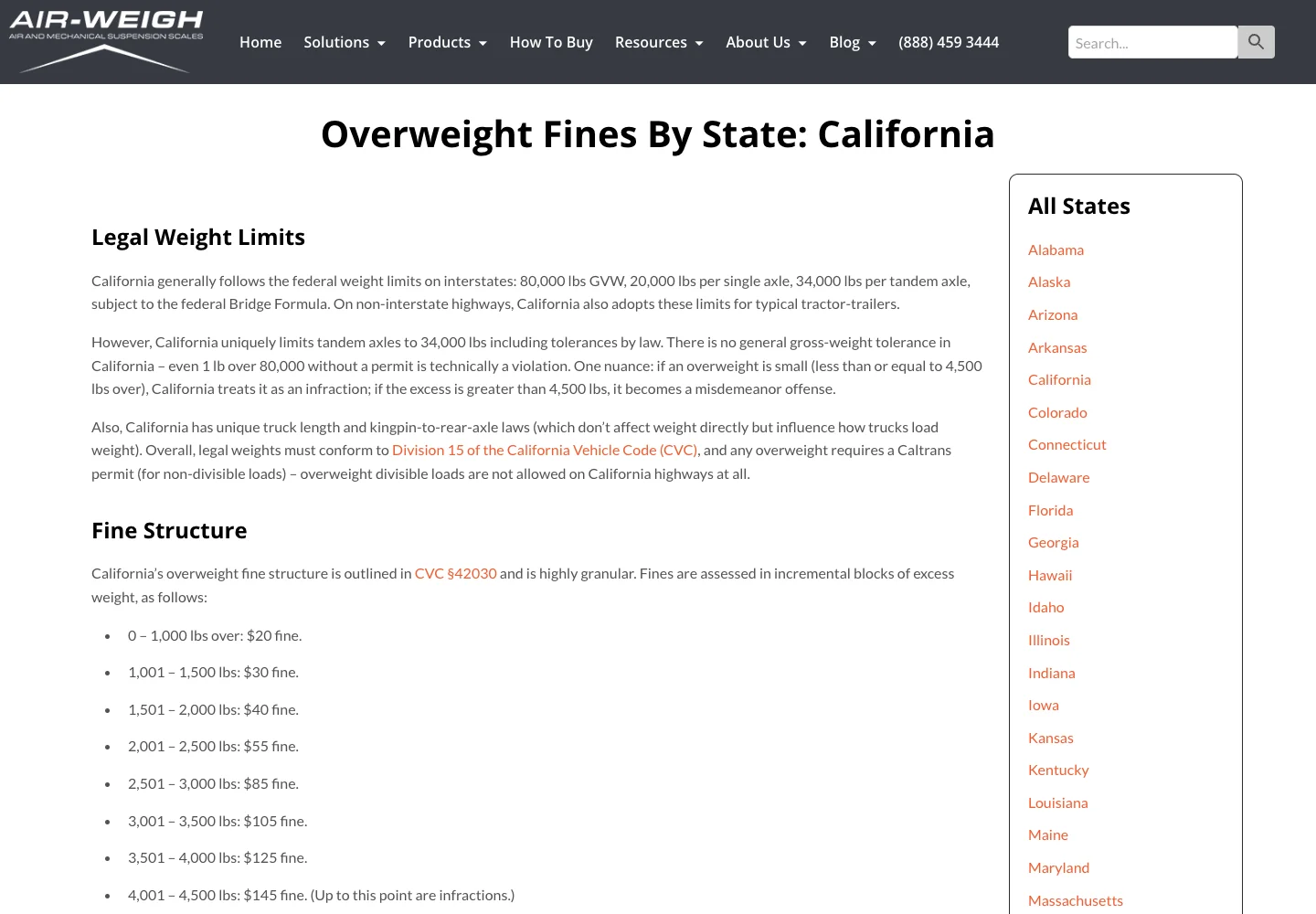
The Five Categories of Essential FAQs
Good FAQs cover five areas that matter to potential customers:
- Basic business information: who you are, where you work and how to reach you
- Services or products: what you offer and who it’s for
- Process and expectations: what working with you looks like
- Pricing and payments: what things cost and how people can pay
- Support after the job: what happens once the work is done
The 15 Essential FAQs
These questions fit most small businesses. Adjust the wording to match how your customers talk.
Basic Business Information
- 1. What areas do you serve?
List specific cities, neighborhoods or delivery areas. A landscaper might write “Grants Pass, Merlin, Murphy and the rest of Josephine County.” That helps people and AI match you to local searches.
- 2. What are your hours of operation?
Include regular, weekend, emergency and holiday hours.
- 3. How do I contact you?
List every way to reach you and how quickly you usually respond.
Service or Product Specifics
- 4. What services do you offer?
Give a clear overview and link to the detailed pages.
- 5. Do you handle [a specific service or product]?
Answer the “do you do this?” questions your industry hears most.
- 6. Who are your services best suited for?
Help customers decide for themselves whether you’re a fit. You get better leads and AI gets a more accurate picture of you.
Process and Expectations
- 7. How do I get started or book an appointment?
Spell out the first step: a call, a form, a quote request or a scheduling tool.
- 8. What should I expect during the process?
Walk through the stages of working with you.
- 9. How long does [the service or delivery] usually take?
Give realistic ranges. Timing questions come up in AI answers all the time.
- 10. What do I need to prepare or provide?
Help people show up ready, so the first visit goes smoothly.
Pricing and Payments
- 11. How much does [the service or product] cost?
Give ranges when you can’t quote an exact price.
- 12. Do you offer free estimates or consultations?
State your policy plainly.
- 13. What payment methods do you accept?
Mention financing or deposit requirements where they apply.
Post-Service Support
- 14. What if I have a problem after the service?
Describe your warranty or follow-up support.
- 15. Do you offer ongoing maintenance or support?
Explain any maintenance plans or recurring service.
Russco in Google’s AI Overview
On September 16, 2026, we searched Google for “who does trench digging and land clearing in Roseburg Oregon.” Google’s AI Overview named Russco Enterprises, drawing on its homepage, its trench-digging service page and its Roseburg service-area page.
One dated search observation from Merlin, Oregon. AI answers vary by person, place and time. See the Russco Enterprises project
How to Write Strong FAQ Answers
Good questions deserve good answers. A few guidelines:
- Keep answers short: two to four sentences
- Use everyday language: use industry terms only when your customers use them
- Be specific: concrete expectations reassure people
- Add a gentle next step: point readers to what to do next
- Link to the details: keep the FAQ short and let the full page carry the depth
Where to Place FAQs on Your Website
Put FAQs in more than one place so people and AI can find them:
- A dedicated FAQ page: complete and indexable
- Service or product pages: three to five specific FAQs per page
- Blog posts and articles: FAQs that match the topic
- Homepage: a few big-picture FAQs for first-time visitors
Repeating an FAQ on more than one page is fine and often helpful.
FAQ Schema Makes FAQs Machine-Readable
FAQ schema spells out your questions and answers for AI tools and search engines.
- Rich search results: Google may show your FAQs right in the results
- AI citations: clean answers are easier for AI to quote
- Clear signals: search engines can file your content in the right place
Your web developer or content team usually adds the schema.
Getting Started with Your FAQs
- Start with your top 10: the questions you answer constantly
- Write in your own voice: natural, conversational answers
- Read them aloud: if it sounds odd spoken, rewrite it
- Add to them over time: your FAQs grow with your business
- Spread them across your site: and apply schema consistently
FAQs as Part of a Broader Content Strategy
FAQs work on their own and they also feed bigger content. An FAQ topic often grows into an article, and articles often end with an FAQ section.
FAQs catch the quick-answer searches. Articles catch the research searches. Together they cover people at every stage.
Making Your FAQs Work Harder
Every business gets these questions. Write the answers where customers and machines can find them, starting with the ten you hear most.
If you want your FAQ coverage reviewed and expanded with the schema done properly, we will go through your site on a content review call and list which essentials are missing and where they belong. Call or text (541) 226-8087.
Related Articles
- The Organized Pantry Principle: Why AI Needs Your Content Labeled
- What Makes a Website AI-Ready? A Feature-by-Feature Breakdown
- What AI Sees When It Looks at Your Website (And What's Probably Missing)
- How to Get Voice Assistants to Recommend Your Business
- Is Your Business Invisible to AI Search? A 20-Point Visibility Audit

I run Good Creations in Grants Pass. I work directly with business owners on website design, content, and search. My work includes service writing, inventory websites, and custom publishing tools.
Meet Bob