Name the Decision Before Writing the Page
List the facts that decide whether a job is a good fit. Depending on your business, that might be the material, the dimensions, the site conditions, the finish or how the thing will be used. Check the list with the person who does the work.
Keep illustrative examples clearly labeled as examples. If a detail changes the answer, explain that condition and tell the customer when they’ll need an individual assessment.
Russco’s Service Pages Show Up for the Jobs People Search
When we researched the excavation market in Douglas County, we built Russco Enterprises a separate page for each of its 12 services and 5 service areas. Search Console shows those individual pages appearing for the jobs people search for.
August 17 to September 13, 2026. Google Search Console web-search totals. Traffic is still modest; impressions count appearances in search results.
A page for every job
A property owner searching for trench digging lands on a page about trench digging, with the equipment, the factors that affect an estimate, and a way to request one.
See the Russco Enterprises project →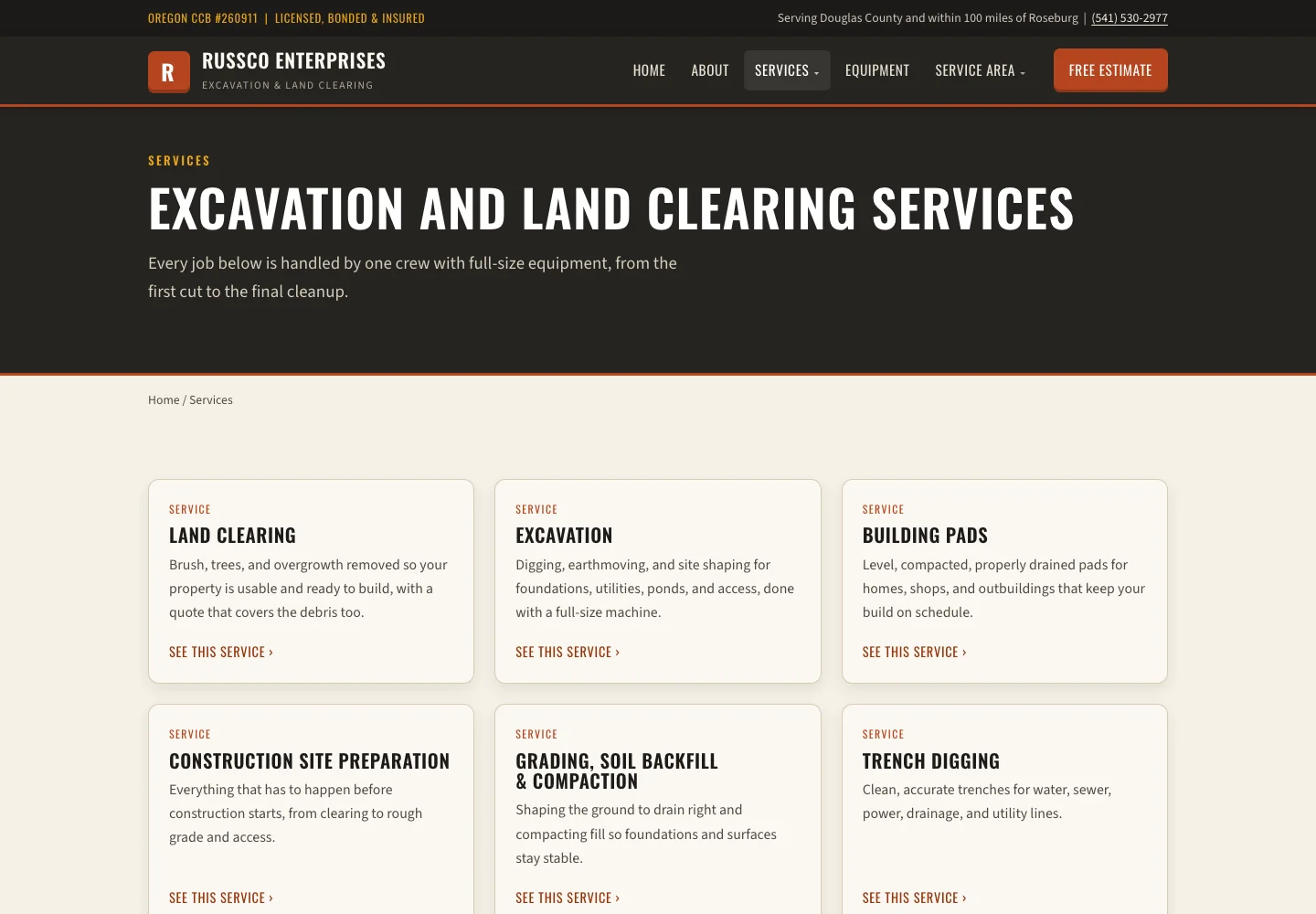
Explain Technical Terms as You Use Them
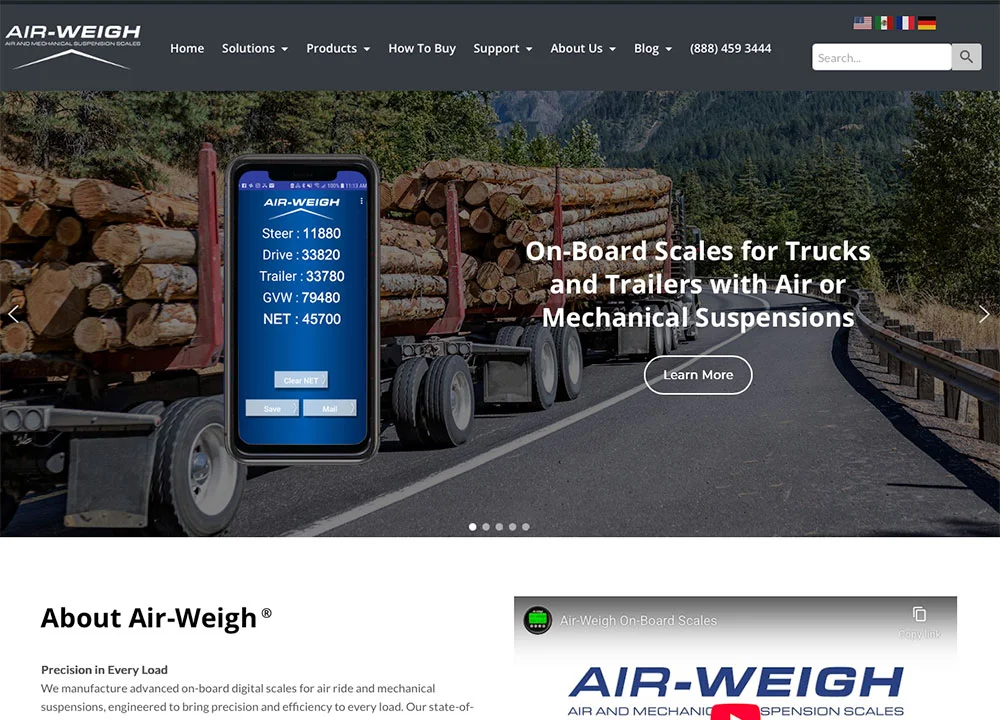
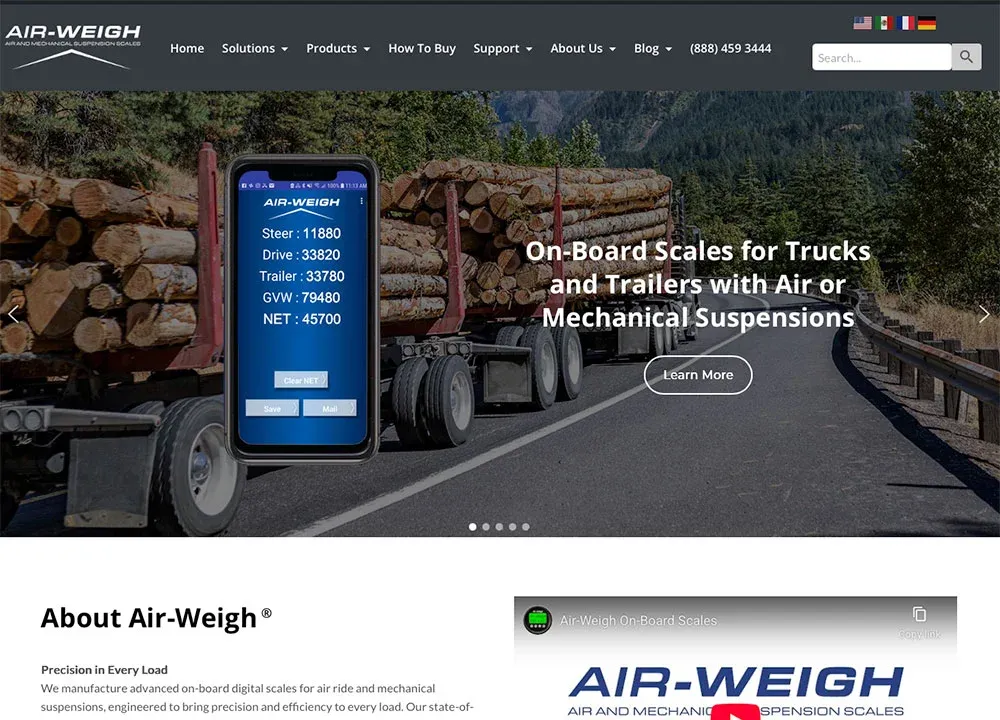
Our Air-Weigh work includes product content and scale-selection guidance for truck and trailer buyers. The writing ties each scale range to the vehicle and the kind of work it does, which is the information the buyer came looking for.
Use the term a specialist would use, then explain it for a reader comparing options for the first time. Keep verified specifications in their own place, apart from general descriptions.
Show the Difference in the Copy
Vague: “We offer solutions for all your project needs.”
Specific: “We handle [specific work] for [specific application]. Before we recommend an option, we need [the details that determine fit].” Fill in the brackets with verified facts about the work you do.
Add a photo, project or diagram when it helps explain the difference. Use the caption to tell the reader what to look at.
Russco in Google’s AI Overview
On September 16, 2026, we searched Google for “who does trench digging and land clearing in Roseburg Oregon.” Google’s AI Overview named Russco Enterprises, drawing on its homepage, its trench-digging service page and its Roseburg service-area page.
One dated search observation from Merlin, Oregon. AI answers vary by person, place and time. See the Russco Enterprises project
Put the Answer Where the Decision Happens
If the question decides which service or product to choose, answer it on that page or link straight to a guide that does. Customers find the answer fastest right beside the choice they’re making.
Our copywriting service combines research, structure and writing, and your business and technical facts are reviewed before anything is published.
Build the Page Around Which Option Fits
For a specialized product, the question customers bring is “Which one fits my setup?” Build the page around that question, and ask the business which facts change the answer. Depending on the product, that could be the vehicle setup, operating conditions, required capacity or installation limits.
For each fact, note who can verify it and where the customer can find it. An equipment specialist should approve every compatibility statement before it goes on the website. If a setup needs a conversation, say so and tell the customer what information to send.
The Air-Weigh project shows this in practice, because it includes scale-selection guidance. Any specific claim about which scale fits a truck gets confirmed against the current product documentation, which keeps detailed writing useful and accurate. Start with your own most common fit question, list the facts that decide it and ask the person who does the work to check them.

I run Good Creations in Grants Pass. I work directly with business owners on website design, content, and search. My work includes service writing, inventory websites, and custom publishing tools.
Meet Bob