An AI-ready store does both. It’s structured so AI tools understand your products and match them to what customers search for, and it’s designed so the visitors who arrive complete their purchase.
Here are the features that make an online store AI-ready, from product pages to checkout. If you run a small online store and want more traffic, or more sales from the traffic you have, these are the pieces to check.
The Two Jobs Every Online Store Has
Getting found means AI and search engines understand what you sell. That takes:
- Clear product information
- Proper schema markup
- Logical category structure
- Supporting content that builds topical authority
Turning visitors into customers means making buying easy and giving shoppers confidence:
- Professional design
- Clear product presentation
- Simple navigation
- Streamlined checkout
The two jobs support each other. A well-structured page helps AI understand your products and helps shoppers decide. Good navigation helps with both discovery and ease of use.
Every feature below does double duty.
Gresham RV Sales Keeps Every Listing Fast
Gresham RV Sales updates its own inventory with tools we built for its staff, and the pages stay quick on a phone as units come and go.
Google Analytics and Search Console, August 17 to September 13, 2026. PageSpeed Insights homepage test September 16, 2026: 93 mobile, 99 desktop, and 100 for accessibility, best practices and SEO on both devices.
Built for the way the lot changes
Staff add a unit, choose the featured photo, drag the gallery into order and publish the listing.
See the Gresham RV Sales project →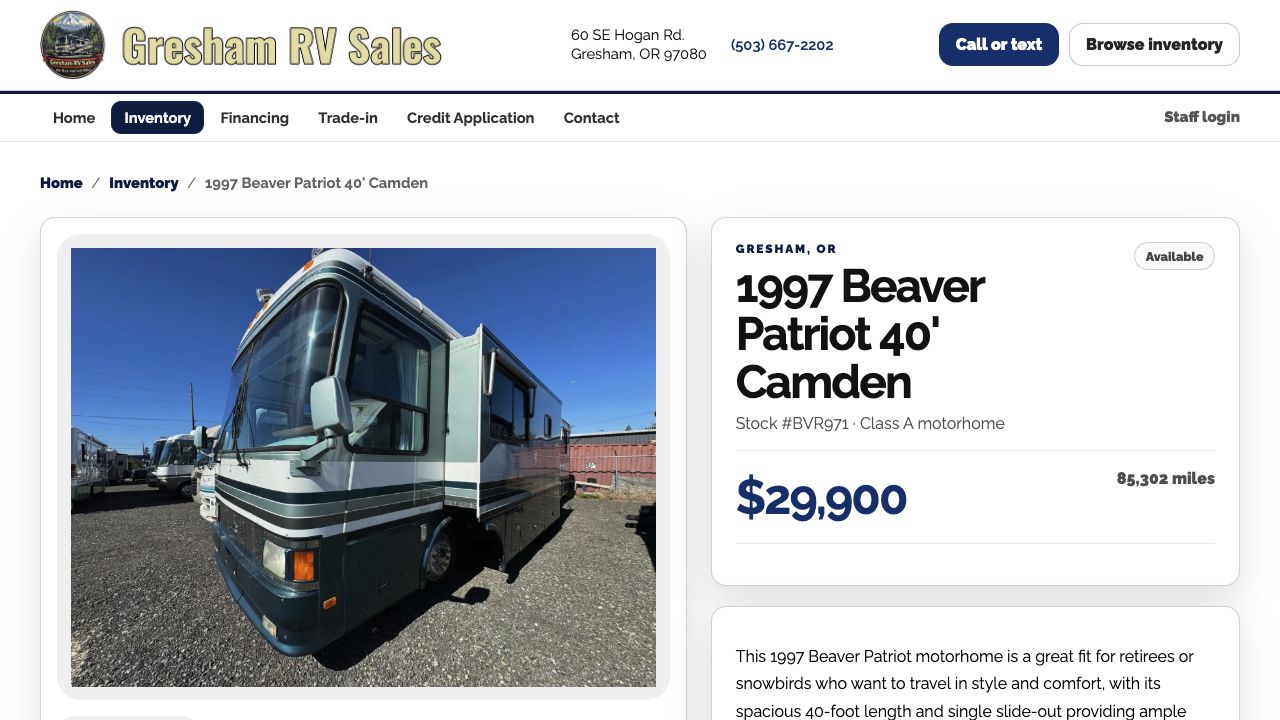
Product Pages, Where Discovery Meets Decision
Product pages are where AI pulls its information and where customers decide whether to buy, so they carry the most weight.
Unique, Detailed Descriptions
The manufacturer’s description appears on thousands of other sites. Your own description sets your product page apart by explaining:
- Who the product is for
- What problems it solves
- How it compares to alternatives
Specific descriptions help AI understand the product and help shoppers buy with confidence.
Clear Specifications and Details
Dimensions, materials, features and compatibility answer the questions shoppers would otherwise hesitate over. Clearly organized specs help people and AI alike.
Complete specs keep shoppers moving toward the cart.
Quality Images
Several high-quality photos show the product from every angle, its size and how it’s used. Photos stand in for picking the product up in a store.
Better photos sell more products.
Customer Reviews
Reviews reassure shoppers and answer real customer concerns, and they add fresh content for AI to index.
Review schema shows your star ratings in search results, which earns more clicks.
Product FAQs
FAQs answer the questions that make shoppers hesitate and cut down on the questions you get by email. They also give AI tidy question-and-answer pairs to use.
Good product FAQs cover compatibility, care, installation and what’s in the box.
Product Schema Markup
Product schema spells out:
- Name
- Description
- Price
- Availability
- Brand
- Review data
That clarity improves how AI understands your products and makes them eligible for rich search results.
Category Structure and Navigation
Organize your categories the way customers think about your products.
Customer-Centric Categories
Group products by what customers want to do or the problem they want to solve. That matches how people search and shop.
Logical Hierarchy
Use nested categories, each with its own page explaining the section. Category pages can rank for broader searches while individual products rank for specific ones.
Intuitive Navigation
Shoppers should reach any product within three clicks. Clear menus and a search box that works keep sales moving and help AI understand your store.
Supporting Content Around Your Products
Supporting content reaches customers earlier in their decision and builds authority.
Buying Guides
Guides like “How to Choose the Right [Product Type]” help undecided buyers and attract people still researching.
They make you the advisor as well as the store.
Problem-Solving Articles
Articles about your customers’ problems bring in visitors your product pages can’t reach on their own.
Those articles introduce your products naturally, as the solution.
How-To and Usage Content
Usage guides answer questions after the purchase, build loyalty, and show new shoppers you stand behind what you sell.
Most of The Black Bird’s Visitors Come From Search
The Black Bird’s department pages, weekly sales and event pages give local shoppers something to find on Google every week of the year.
Google Search Console and Analytics via Site Kit, August 19 to September 15, 2026; rounded dashboard values. Site-wide activity, not sales.
Departments people search for
Anglers searching for gear in Medford land on the fishing department, with the current promotions right there.
See The Black Bird project →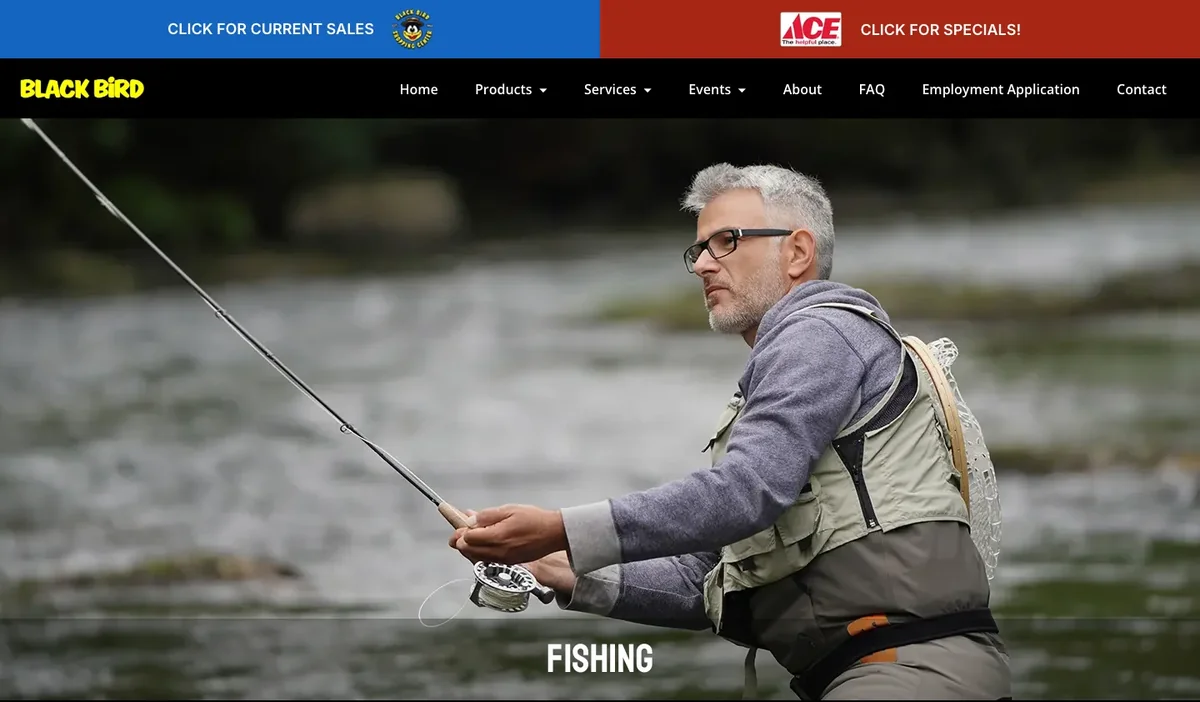
Technical Foundation and Shopping Experience
Mobile-First Design
More than half of online shopping traffic comes from phones, so your store has to work perfectly on a phone.
Fast Page Speed
Fast sites rank better and sell more. Keep images, code and hosting optimized.
Streamlined Checkout
- Show shipping costs early
- Allow guest checkout
- Reduce required form fields
- Provide multiple payment options
Every step you remove brings in more completed orders.
Trust Signals
- Security badges
- Visible contact information
- Clear return policies
- Customer service availability
Reinforce trust at every stage of the shopping process.
AI-Specific Enhancements
Comprehensive Schema Implementation
Use schema for products, reviews, FAQs and offers, so machines read your store accurately.
Outcome-Focused Titles
Titles that include the result or the use case attract problem-based searches and are more likely to be cited by AI.
Structured Q&A Content
Question-and-answer blocks on product and category pages give AI answers it can lift out to match real customer questions.
Measuring What Matters
- Traffic by source: which channels bring shoppers
- Content-to-purchase paths: how visitors move through the site
- Conversion rates: by page and by product
- Cart abandonment: where shoppers stop
- Revenue attribution: which content and channels bring in sales
The numbers show you what to improve next.
Is Your Store AI-Ready?
Many small stores were built before AI search. Thin descriptions, missing schema, loose category structure and a long checkout all hold back traffic and sales.
An audit looks at:
- Product page completeness
- Schema implementation
- Category structure
- Supporting content depth
- Technical performance
- Conversion optimization
A rebuild to AI-ready standards brings in more shoppers and turns more of them into customers. If you’d like me to audit your store, call or text (541) 226-8087.
Related Articles
- Problem-Focused E-commerce: How Small Stores Win in AI Search
- The Hidden Reason Template Websites Fail in AI Search
- What Makes a Website AI-Ready? A Feature-by-Feature Breakdown
- The Organized Pantry Principle: Why AI Needs Your Content Labeled
- What AI Sees When It Looks at Your Website (And What's Probably Missing)

I run Good Creations in Grants Pass. I work directly with business owners on website design, content, and search. My work includes service writing, inventory websites, and custom publishing tools.
Meet Bob