Measure the Explanation by What It Tells the Reader
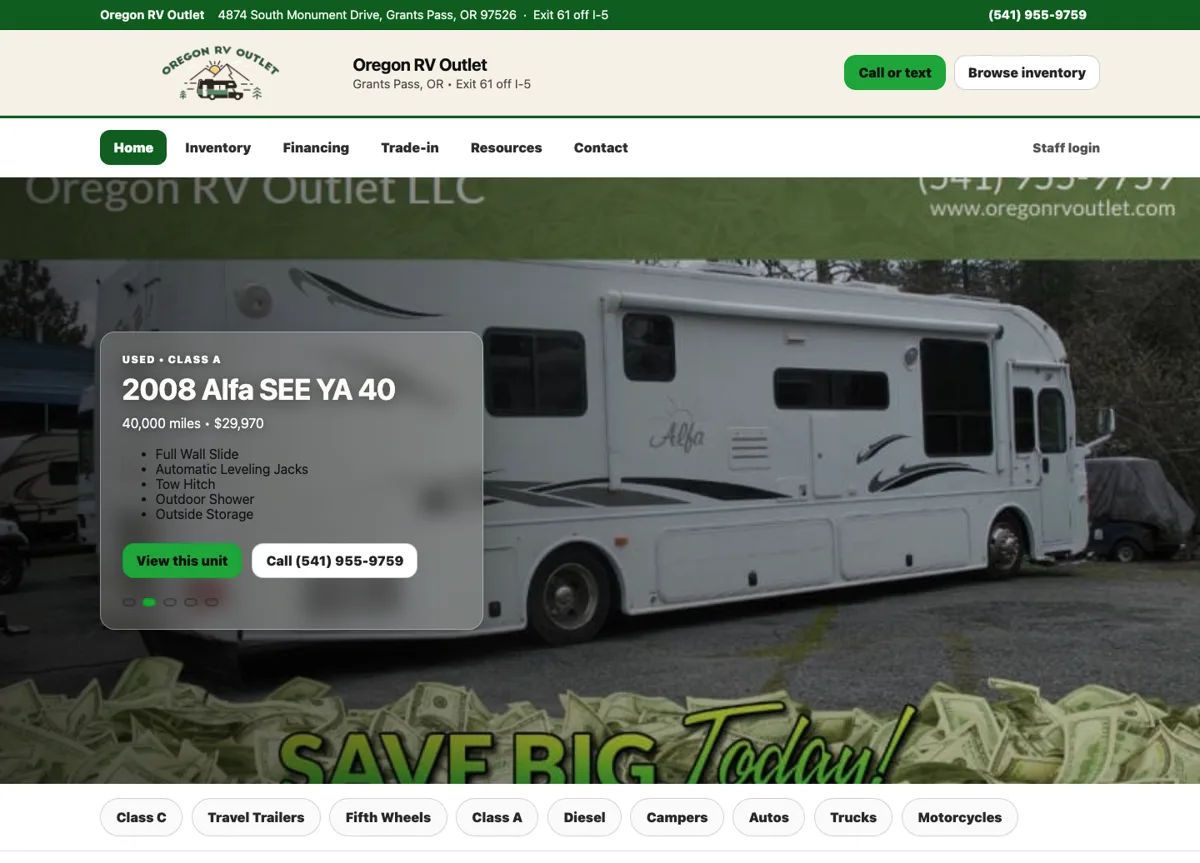
“We build websites that help your business grow” could describe anyone’s work. “We built individual RV listings with photos and a way to ask about a specific vehicle” describes a feature someone can go look at.
That second sentence comes from our Oregon RV Outlet project. It describes the feature and leaves sales numbers out, because claiming those would take records. Being specific and being careful go together.
Russco’s Service Pages Show Up for the Jobs People Search
When we researched the excavation market in Douglas County, we built Russco Enterprises a separate page for each of its 12 services and 5 service areas. Search Console shows those individual pages appearing for the jobs people search for.
August 17 to September 13, 2026. Google Search Console web-search totals. Traffic is still modest; impressions count appearances in search results.
A page for every job
A property owner searching for trench digging lands on a page about trench digging, with the equipment, the factors that affect an estimate, and a way to request one.
See the Russco Enterprises project →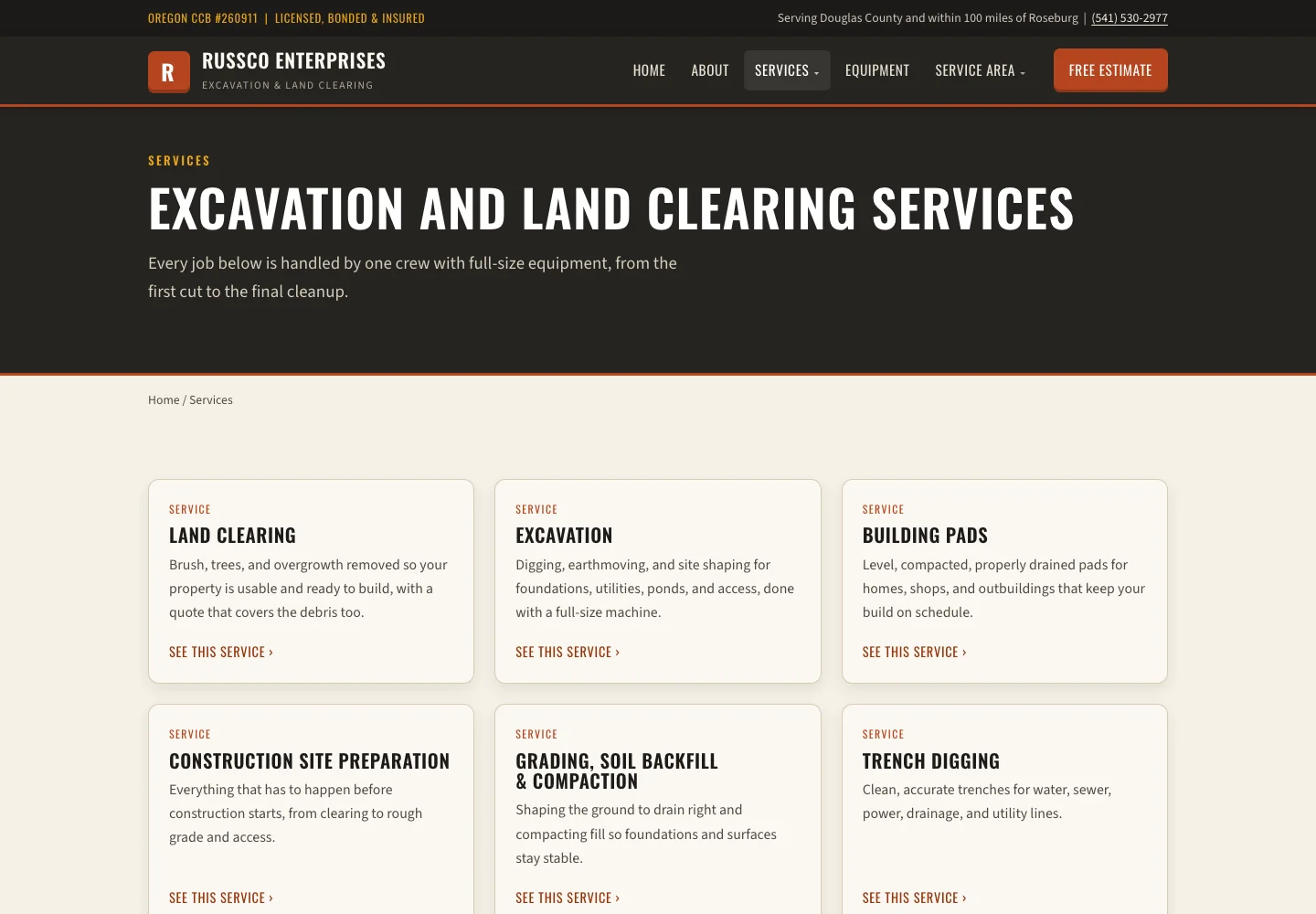
Finish the Answer the Heading Promised
A page titled as a checklist should give the reader checks they can do. A product comparison should name the criteria that change the choice. A how-to should explain the steps and their limits.
A page that skips part of its answer is like a recipe that lists the ingredients and stops before the oven temperature. Add the missing step, or narrow the title to match what the page covers.
Show Where the Knowledge Comes From
Draw on your own work, checked technical information or a current source that fits the topic. Name the author and link to useful background. Put each source beside the claim it supports, where it helps the reader check it.
Google’s guide to its ranking systems says the helpful content system became part of its core ranking systems in March 2024. Treat that as history, and write every page for the person reading it.
Use a Short Editing Test
- Does the opening answer the question?
- Is there a concrete example or explanation?
- Are changing facts checked and dated when needed?
- Can the reader take the next step with everything they need on the page?
Our copywriting service runs the same test on every service page and article. When a shorter answer covers everything, I keep the shorter one.
Air-Weigh’s Guides Bring In 41% of Its Google Clicks
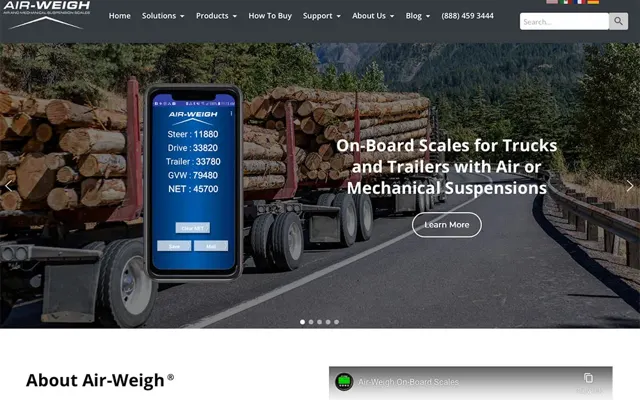
Air-Weigh makes on-board scales for trucks. Its website has a detailed weight-law guide for each state, answering the question a fleet manager or driver types into Google.
August 17 to September 13, 2026. Google Search Console clicks and impressions; AI-assistant sessions from Google Analytics (75 attributed to ChatGPT). Site-wide activity, not sales.
Answer the exact question
The California and Texas guides each run about 900 words, and they rank for questions as specific as the bridge-law chart for Montana.
See the Air-Weigh project →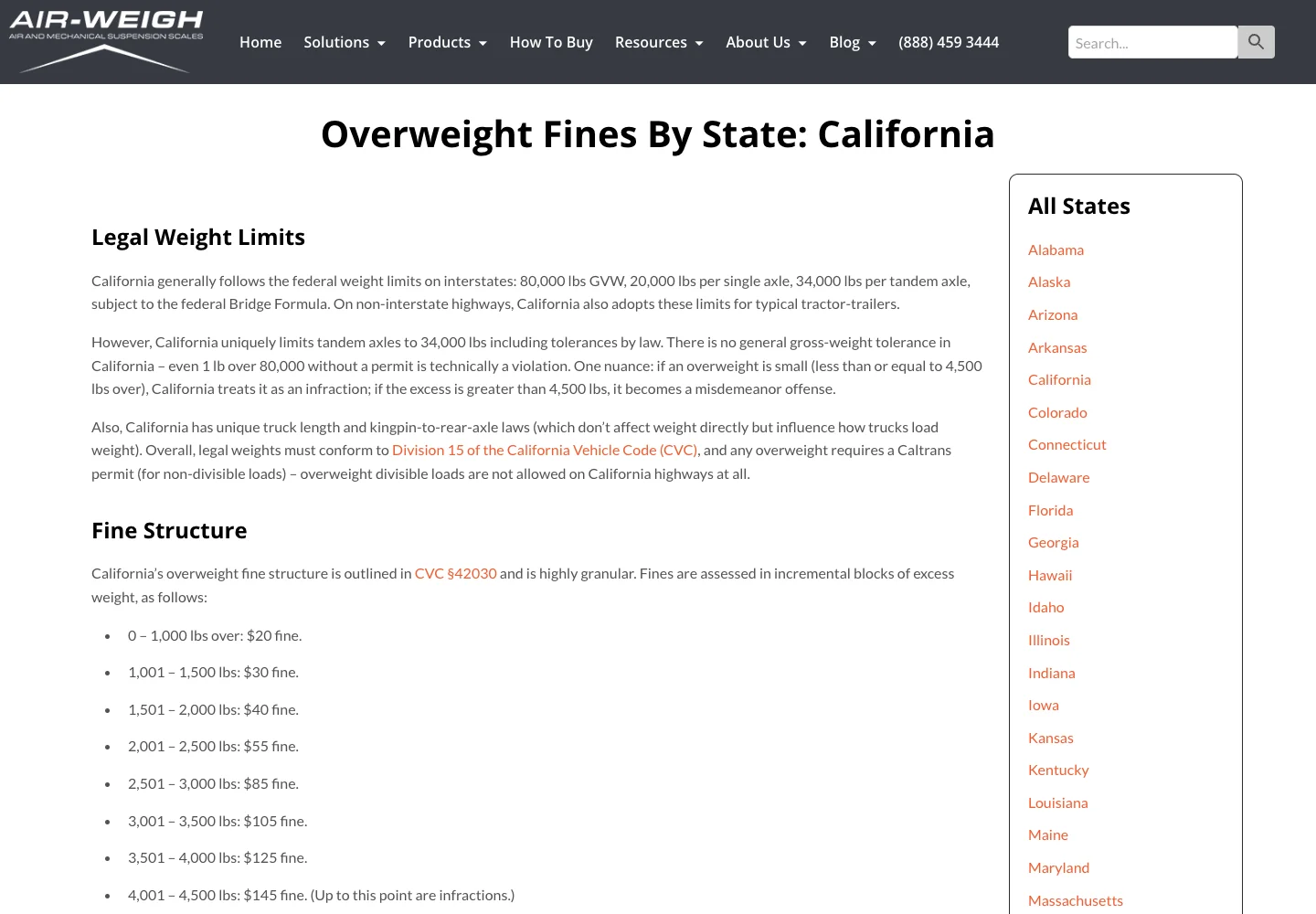
Edit a Paragraph by Adding the Missing Decision
Before: “We create useful websites that connect businesses with their customers.” That sentence could describe almost any project.
After: “For Oregon RV Outlet, shoppers can browse individual vehicles and ask about the RV they are considering.” This one names the business, what the customer does and the feature we delivered, and the project page lets the reader see the work.
The improvement comes from specific detail. Do the same with advice: swap a general instruction for the check itself, show an example and explain what the result means. Keep sources next to claims that depend on a platform, and have the business owner approve technical facts. Pick one paragraph on your own homepage and give it the same before and after treatment.

I run Good Creations in Grants Pass. I work directly with business owners on website design, content, and search. My work includes service writing, inventory websites, and custom publishing tools.
Meet Bob