Each of those groups taught Apple something it used to win the next one. If you own a small business in the Rogue Valley and want a foothold in your industry, the same approach works on a much smaller scale.
Apple’s First Niche Was Graphic Artists and Designers
Apple’s first niche was the graphic arts and design community, and the original Macintosh line was built for them. The hardware and software could produce visuals and animation that designers struggled to create on other machines. Winning that group gave Apple a loyal base and a reputation it could carry into new product lines.
Apple also gave designers tutorials and software support. Designers saw a company that understood their work, and they recommended the Mac to each other.
Apple’s Second Niche Was Parents and Families
Apple’s second niche was parents and families, and the product was the original iMac. Parents wanted a computer that was easy to use, affordable, and good for the whole family. The internet was brand new, and it felt too complicated for anyone who wasn’t a computer nerd. Home computers were also relatively new, and they were for “computer people,” as Jeff Goldblum puts it in the first ad below.
The original iMac was designed to make the internet simple enough for mom and dad to buy one for the house. It did everything a desktop PC did, in one compact unit that fit easily into any home.
Apple ran a series of ads with the actor Jeff Goldblum comparing the iMac to the PC. Later models came with iMovie, so families could start making their own video compilations the day they plugged it in. The simple setup, the friendly design and Apple’s reputation with artists made the iMac a huge success.
Most of The Black Bird’s Visitors Come From Search
The Black Bird’s department pages, weekly sales and event pages give local shoppers something to find on Google every week of the year.
Google Search Console and Analytics via Site Kit, August 19 to September 15, 2026; rounded dashboard values. Site-wide activity, not sales.
Departments people search for
Anglers searching for gear in Medford land on the fishing department, with the current promotions right there.
See The Black Bird project →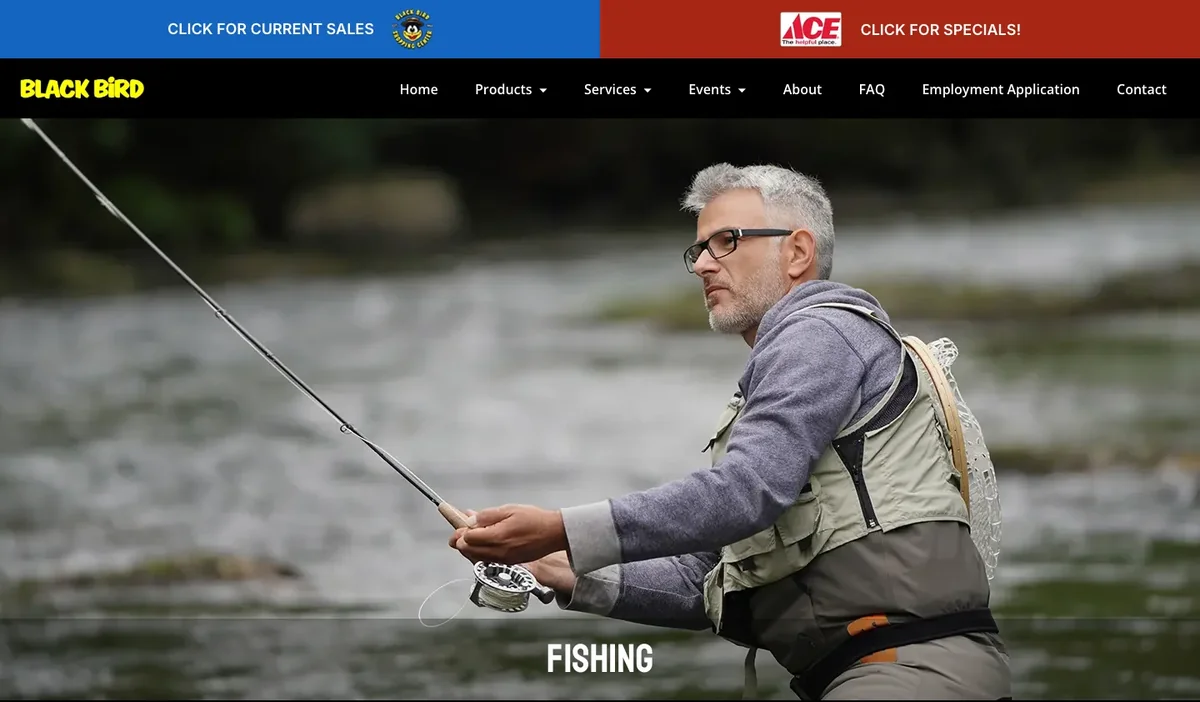
Apple’s Third Niche Was Teens with the iPod
Once the iMac was in the living room, Apple turned to the next generation of computer users. Teenagers became the iPod’s market. Holding 1,000 songs may not sound like much today, but in 2001 most people carried a Sony Walkman with a single cassette or CD. Having 1,000 songs at your fingertips, on a device that fit in your pocket, changed the way people listened to music on the go.
Teens flocked to stores to get their hands on these little devices, and the iPod set sales records for Apple. This is also when Apple started building its now-famous ecosystem. The iPod worked on PCs, and it just worked when you plugged it into an iMac.
Apple’s Fourth Niche Was Business Users with the iPhone and iPad
The iPhone and iPad gave business users their documents, email and calendars wherever they went. Employees could work from a client’s office, a job site or an airport. If they were in a meeting and needed a file, they opened it on their tablet. Apple’s security features gave companies confidence that sensitive data stayed protected.
Apple also worked with enterprise software such as SAP, so companies could run their operations from the same devices their employees already carried. That business market is still one of Apple’s strongest today.
What Apple’s Niches Mean for Your Business
Apple grew from graphic artists and designers, to families with the iMac, to teens with the iPod, to business users with the iPhone and iPad. Each group gave Apple a loyal base to build the next one from. A small business can do the same thing. Pick the customers you serve best, speak directly to them, and let that group become the base you grow from. If you would like help finding your niche and building your website around it, call or text me at (541) 226-8087.
Oregon RV Outlet Turned Its Inventory Into Search Traffic
Every RV on Oregon RV Outlet’s lot has its own page with photos, specifications and a way to call or text about that unit. Those pages give Google something specific to show for each search a shopper makes.
August 13 to September 9, 2026. Clicks and impressions from Google Search Console; organic-search sessions from Google Analytics. These are different measures and are not added together.
One page for every unit on the lot
A shopper searching for a specific trailer can land on the page for that exact trailer, see the photos, and call about it.
See the Oregon RV Outlet project →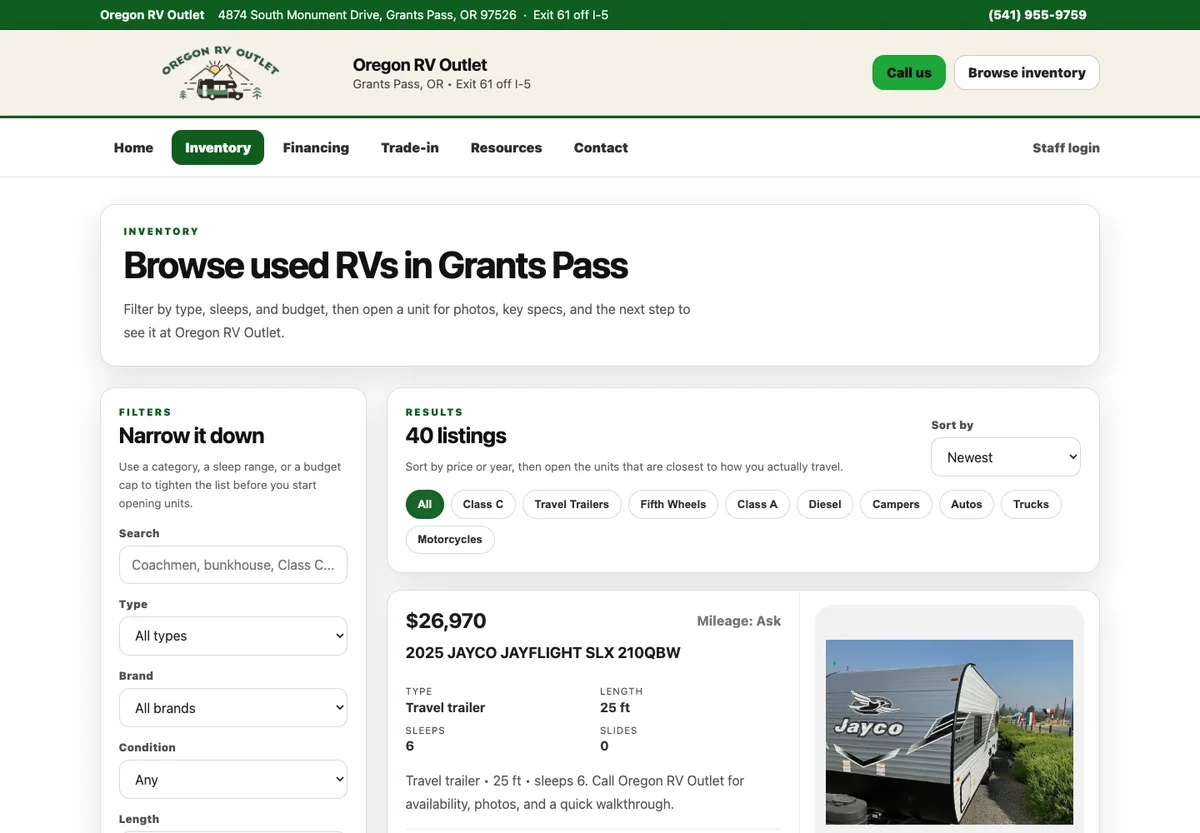

I run Good Creations in Grants Pass. I work directly with business owners on website design, content, and search. My work includes service writing, inventory websites, and custom publishing tools.
Meet Bob