So what is digital marketing? Think of it as your virtual shop window. It shows your products and services to the world online, where your customers already spend much of their day, alongside the print ads and signs you may already use.
What is Digital Marketing?
Digital marketing sounds big and complex, and it’s simpler than it sounds. Picture setting up a booth at the Josephine County Fairgrounds to show and sell what you offer. Now imagine that booth online. It could be your website, a social media page or an email newsletter.
Here are three digital marketing strategies that work well for small businesses.
1. Social Media Marketing
Social media platforms like Facebook, Instagram, LinkedIn and X are a buzzing town square. People gather there to chat, share stories and find out what’s new, which makes it a great place for your business to be.
A business page on these platforms is like a booth at a busy fair. You show off your products or services, chat with the people who stop by, and point them to your website. A strong social media presence is the big, bright sign that catches people’s eye as they walk past.
Say you run a small bakery. Use Instagram to share pictures of your mouth-watering baked goods. Just pulled a batch of cookies out of the oven? Snap a picture and post it. New cake design? Share it. Your photos become a display window the whole world can peek into.
Facebook is great for talking with your customers. Answer their questions, reply to comments, and ask what they’d like to see next. Post a live video of a morning at the bakery or introduce your bakers. Your customers see that you’re there for them, and your business starts to feel like a community.
Posting regularly and answering comments and messages makes people feel heard and appreciated. It’s customer service, online. Over time it builds a loyal following, like the favorite vendor at the fair whose customers keep coming back for the food and the friendly conversation.
Social media is well worth the effort. It reaches more people, builds a loyal customer base and gives your business a friendly face.
2. Blogging
A blog is like the friendly neighborhood expert who always has a tip to share or a question to answer. Imagine that expert works for you, telling people about your business and what you offer.
Publishing blog articles regularly keeps that expert talking to your customers around the clock, and you can go as deep as you like, helping customers understand your products and services.
Say you own a small garden store. Your blog can cover different plants and how to care for them, the best time to plant certain flowers, and answers to the questions gardeners ask you every week. Each article is a small conversation between your business and your customers.
A blog also helps new people find you. When you write about what gardeners search for, your articles, and your business, show up in their search results. Each one is a signpost on the internet pointing to your store.
A blog also establishes you as an expert. When people see you sharing useful information regularly, you become the go-to gardening guru in town, and people who see you as the expert become loyal customers.
Your blog reaches more people, shares what you know and builds trust, and that leads to more website traffic, more customers and more growth for your garden store.
Most of The Black Bird’s Visitors Come From Search
The Black Bird’s department pages, weekly sales and event pages give local shoppers something to find on Google every week of the year.
Google Search Console and Analytics via Site Kit, August 19 to September 15, 2026; rounded dashboard values. Site-wide activity, not sales.
Departments people search for
Anglers searching for gear in Medford land on the fishing department, with the current promotions right there.
See The Black Bird project →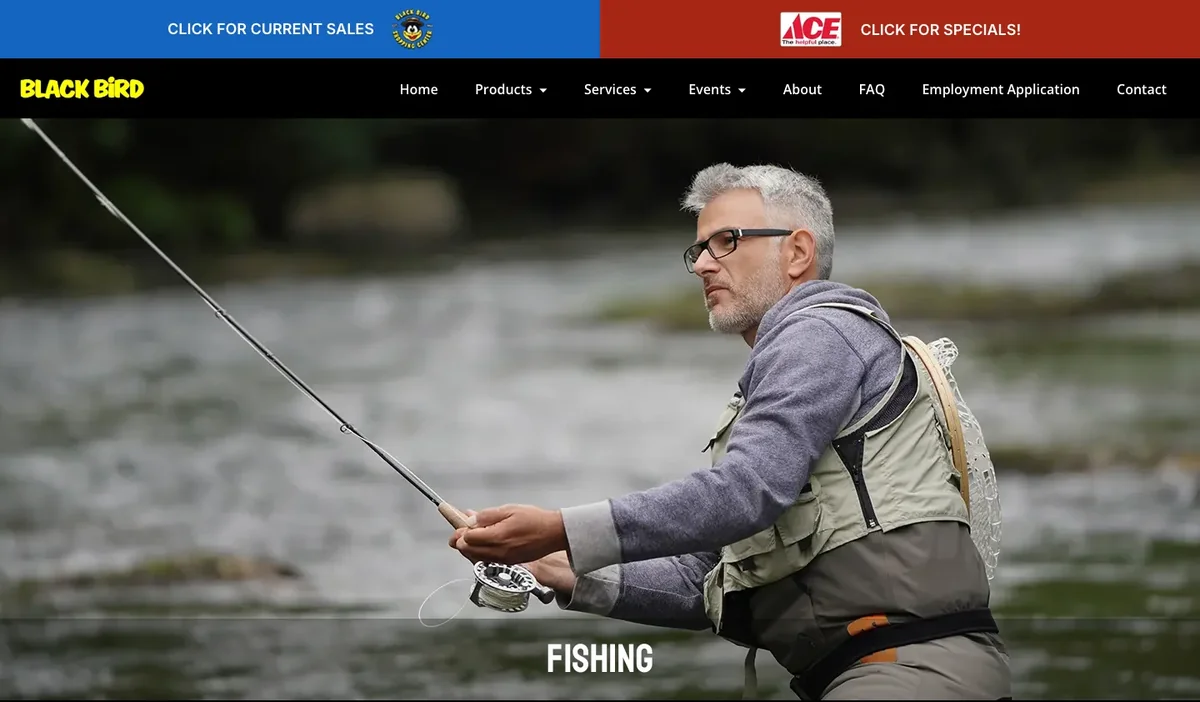
3. Keyword Bidding
Imagine an auction where, instead of artwork or antique furniture, you bid on words and phrases related to your business. Win the bid, and your business gets a prime spot whenever someone searches for those words. That is keyword bidding, also known as search engine marketing (SEM).
Say you own a small pizza place. People craving pizza type phrases like “best pizza in town” or “pizza delivery near me” into a search engine. Those are keywords, and you can bid on them in a digital auction.
Why bid? Visibility. When you win a keyword, your ad can appear at the top of the results for that search, like a front-row spot at a concert where everyone can see you.
Win the bid on “best pizza in town,” and when someone nearby searches that phrase, your ad could be the first thing they see, right when they’re looking for what you sell.
How do you choose which keywords to bid on? Keyword research, a bit of detective work to find the words people use when they search for a pizza place. Online tools show how often people search for each keyword, how much competition there is, and related keywords you might not have thought of.
Keyword bidding puts your business in front of the right people at the right time. Pick keywords that match your business and your customers, and you’ll be seen by people who already want what you offer, like a pizza sign in the middle of a crowd of pizza lovers.
What Digital Marketing Does for Your Business
Reach more people.
A social media post, a blog article or a well-placed online ad can reach hundreds or thousands of potential customers, far beyond a flyer or a newspaper ad.
Become more recognizable.
Regular blog posts, social media updates and online ads keep your name in front of your audience, so they remember you when they need what you sell.
Build a strong online presence.
An easy-to-use website, an active social media presence and a blog full of useful information give your business a strong voice in a crowded room.
Track your results.
Digital marketing shows you exactly how it’s working: how many people visited your website, which pages they read, how long they stayed, and much more. That information helps you make better decisions about your inventory, pricing and marketing.
Getting Started
Digital marketing helps your small business reach more people, become more recognizable, build a strong online presence and measure the results, and that adds up to more customers and more growth.
It doesn’t have to be overwhelming or expensive. With the right strategy, even a small business on a tight budget can use digital marketing to grow. If you’d like help choosing where to start, call or text me at (541) 226-8087.
Oregon RV Outlet Turned Its Inventory Into Search Traffic
Every RV on Oregon RV Outlet’s lot has its own page with photos, specifications and a way to call or text about that unit. Those pages give Google something specific to show for each search a shopper makes.
August 13 to September 9, 2026. Clicks and impressions from Google Search Console; organic-search sessions from Google Analytics. These are different measures and are not added together.
One page for every unit on the lot
A shopper searching for a specific trailer can land on the page for that exact trailer, see the photos, and call about it.
See the Oregon RV Outlet project →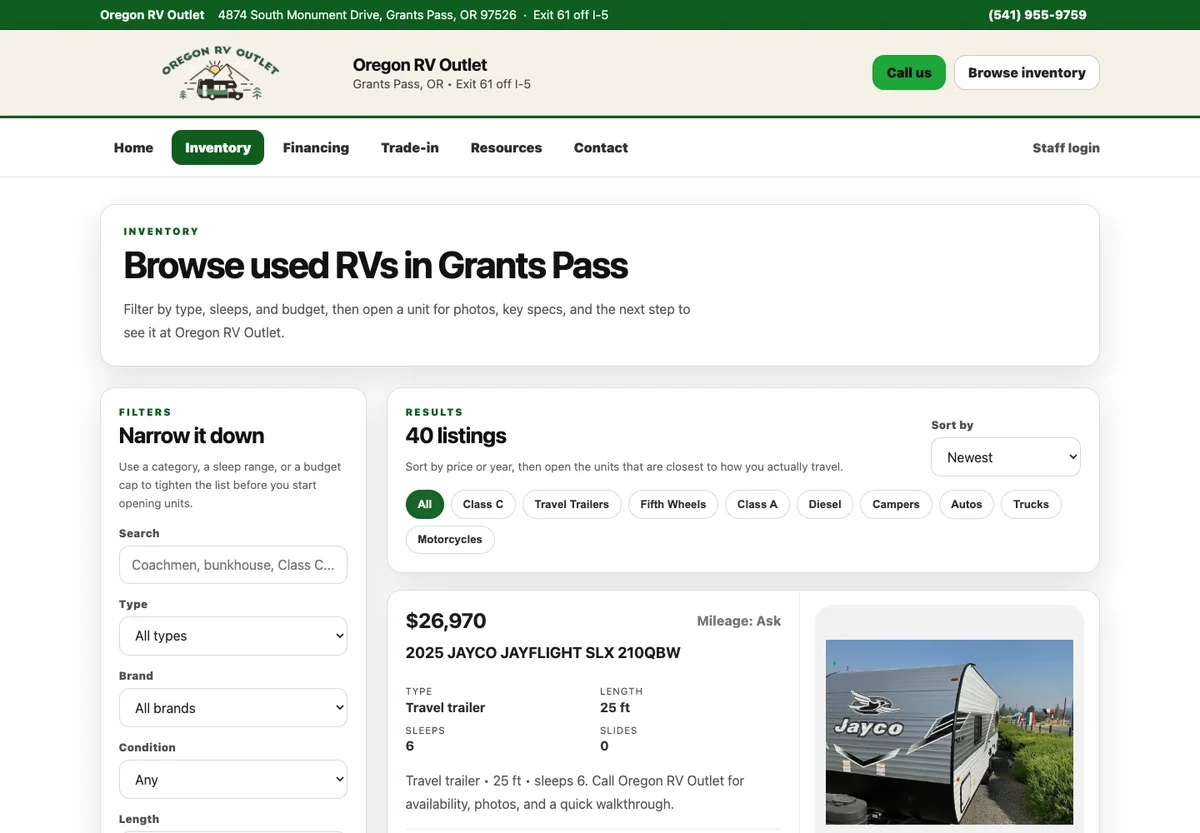

I run Good Creations in Grants Pass. I work directly with business owners on website design, content, and search. My work includes service writing, inventory websites, and custom publishing tools.
Meet Bob