
The short version: Google now penalizes sites that let outside parties publish content mainly to borrow the host site’s search authority. Manual reviewers are already removing those pages from search results, and Google has said automated enforcement is coming.
What Google Is Targeting
Site reputation abuse happens when a website publishes third-party content mainly to manipulate rankings. The content borrows the host site’s reputation to rank.
Here’s what it looks like in practice:
- Paid guest posts with little oversight. A marketer pays to publish keyword-stuffed articles on your blog, and nobody on your side reviews or edits them. The goal is ranking, and readers are an afterthought.
- Product reviews written without testing. An online store hosts reviews by people who never used the products: stock photos, generic specs, nothing learned from real use. The reviews exist only to rank.
- Sponsored content dressed up as editorial. Articles that look like your regular content and are really promotional pieces you had no meaningful hand in.
Russco’s Service Pages Show Up for the Jobs People Search
When we researched the excavation market in Douglas County, we built Russco Enterprises a separate page for each of its 12 services and 5 service areas. Search Console shows those individual pages appearing for the jobs people search for.
August 17 to September 13, 2026. Google Search Console web-search totals. Traffic is still modest; impressions count appearances in search results.
A page for every job
A property owner searching for trench digging lands on a page about trench digging, with the equipment, the factors that affect an estimate, and a way to request one.
See the Russco Enterprises project →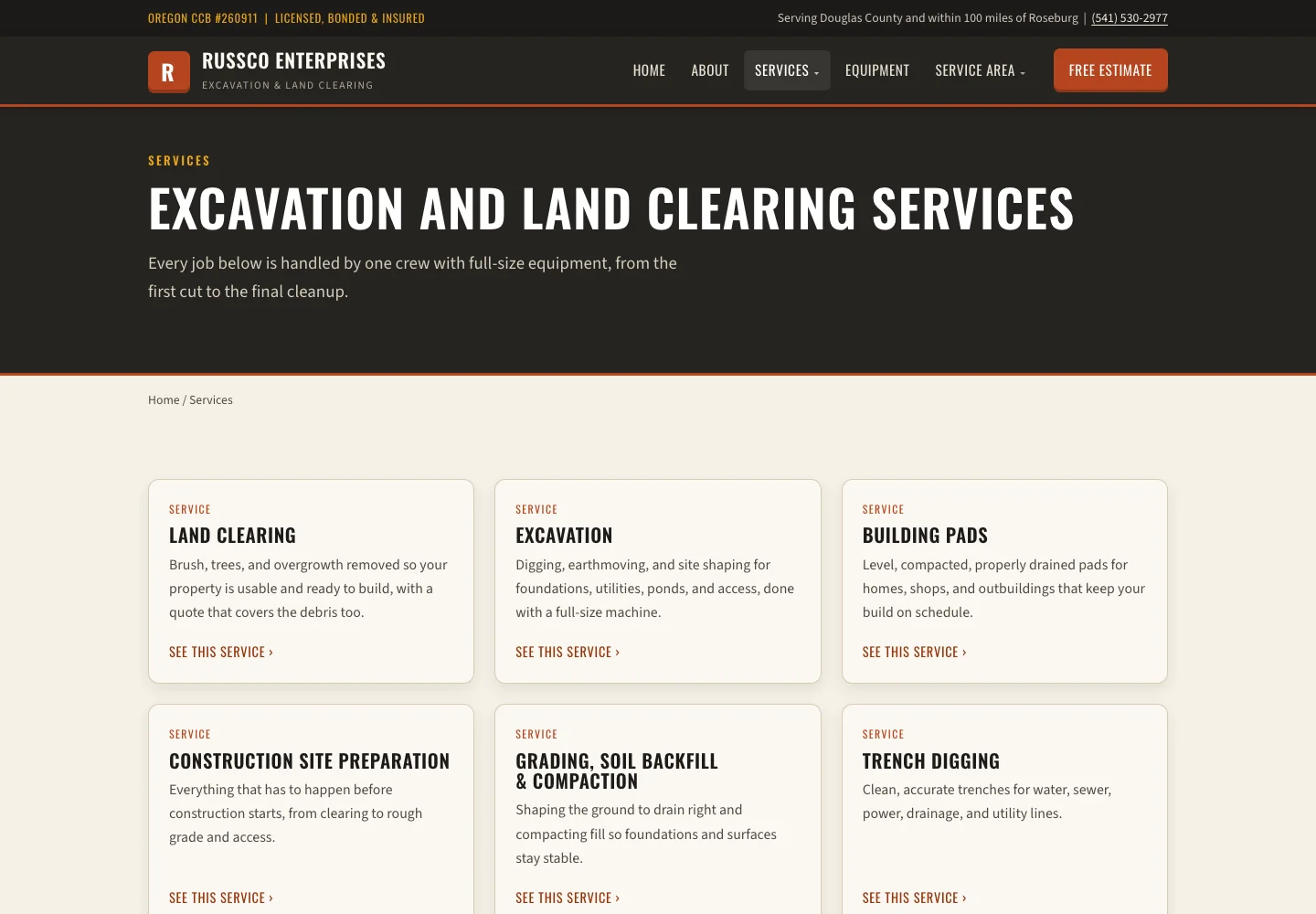
Why Google Considers This a Problem
Google sees four problems with it:
- It’s manipulative. The content exists to borrow your site’s authority, and your audience gets nothing from it.
- Quality is left to chance. When nobody oversees the content, quality and accuracy are unpredictable.
- Readers are misled. Visitors assume content on your site meets your standards, and unchecked third-party content breaks that trust.
- Search results get worse. When ranking tricks work, searchers get less helpful results.
How Google Is Enforcing This
Google has started issuing manual actions against sites doing this. A manual action means a human reviewer examined the site, found violations, and removed the offending content from search results.
Enforcement is manual for now. Google plans to build it into its algorithms, so violations will be caught at scale.
If your site hosts third-party content with little oversight, it’s at risk. The content doesn’t have to look spammy. If it exists mainly to rank, and you aren’t closely involved in creating or reviewing it, it fits the pattern Google is targeting.
What This Means for Your Site
This policy extends Google’s Helpful Content Update. The principle is the same: content should exist to help your audience.
As I wrote in The Three Basic Elements of Digital Marketing:
“Every change Google makes to its algorithm is meant to match people with the right websites. As web designers, our job is to help you identify your target audience and build a site they will love.”
The pattern holds. Google keeps getting better at spotting content written only to rank. Sites built to serve a specific audience grow stronger with each update, and sites built on shortcuts grow more exposed.
Air-Weigh’s Guides Bring In 41% of Its Google Clicks
Air-Weigh makes on-board scales for trucks. Its website has a detailed weight-law guide for each state, answering the question a fleet manager or driver types into Google.
August 17 to September 13, 2026. Google Search Console clicks and impressions; AI-assistant sessions from Google Analytics (75 attributed to ChatGPT). Site-wide activity, not sales.
Answer the exact question
The California and Texas guides each run about 900 words, and they rank for questions as specific as the bridge-law chart for Montana.
See the Air-Weigh project →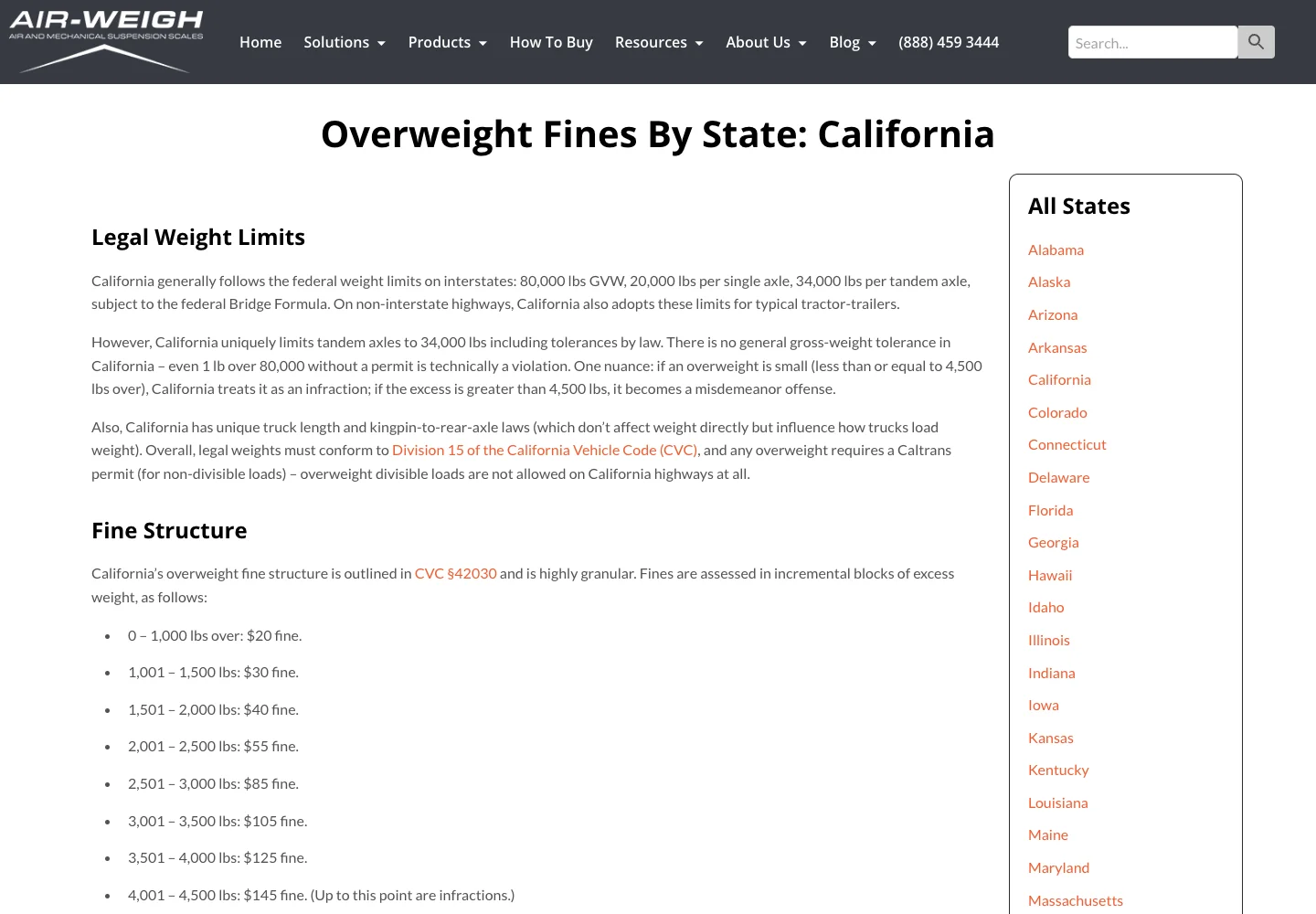
What to Do Next
If you accept third-party content on your site, ask yourself:
- Am I closely involved in creating or reviewing this content?
- Does this help my audience?
- Would I publish this if it had no organic SEO benefit?
If the answer to any of these is no, that content is a liability. The lasting approach is the same as it has always been: focus on your audience, create content they want, and build something worth finding. If you’d like a second opinion on content you’ve been offered, call or text me at (541) 226-8087.

I run Good Creations in Grants Pass. I work directly with business owners on website design, content, and search. My work includes service writing, inventory websites, and custom publishing tools.
Meet Bob